
Trends are of great interest, especially religious and social. Trends represent the best predictions of the future that we have. The State of Our Unions by Barbara Dafoe Whitehead and David Popenoe documents marriage trends in the U.S. and the future looks very bleak. Even though other bloggers have commented widely, some of the most troubling observations of the authors are extracted from their report.
1. In 2004, almost one out of five women in their early forties was childless. In 1976, it was one out of ten. [Note that twice as many women are now childless.]
2. For the college-educated minority of the American population, marriage appears to have gotten stronger in recent years. For everyone else, marriage continues to get weaker. The percentage of spouses among the college educated group who rate their marriage as “very happy” has held fairly steady over recent decades, whereas for other parts of the population the percentage has dropped significantly. Yet, college-educated women aren’t having enough children to replace themselves.
3. For the non college-educated population, ... Marriage rates are continuing to decline, and the percentage of out-of-wedlock births is rising. Because of the many statistically well-documented benefits of marriage in such areas as income, health, and longevity,... America is becoming a nation divided not only by educational and income levels, but by unequal family structures.
4. In 1970, the median age of first marriage for women was not quite 21. Since then the age of first marriage has risen to just short of 26.
5. In 1960, 71 percent of married women had a first birth within the first three years of marriage. By 1990, the percentage had fallen to 37.
6. In 1970, 27.4 percent of women, ages 50-54, had at least one minor child of their own in the household. In 2000, that percentage had fallen to 15.4.
7. Women who hold four-year college degrees are more likely to be childless than women with lower levels of educational attainment.
8. In 1970, 57.3 percent of men, ages 25-29, lived with their own children in the household. In 2000, that share had fallen to 28.8 percent. Of men, ages 30-34, 74.7 percent lived with their own minor children in the household in 1970. In 2000, the share was 46.9 percent.
9. The sex lives of the young and old have been liberated [their words, not mine!] from the traditional association with marriage and children. Many of today’s parents are entering the empty nest years with subscriptions to Match.com, prescriptions for Viagra and hopes for hot new romances. What the two new life stages [before and after a minimum period of child-rearing] have in common is a focus on the self.
10. Victorian brides were shocked by their first experience of sex. Contemporary wives are shocked by their first experience of motherhood. For them, motherhood represents a radical change in the kind of life that they have led during their early adult life and have come to accept as the norm.
11. Television has long made fun of fathers. Now, in a dramatic departure from television tradition, it has turned to ridiculing mothers. The Unfit Mom has become a reality show staple.
12. Demographically, socially and culturally, the nation is shifting from a society of child-rearing families to a society of child-free adults. The percentage of households with children has declined from half of all households in 1960 to less than one-third today—the lowest percentage in the nation’s history.
13. Over half of all first marriages are now preceded by living together, compared to virtually none 50 years ago.
14. A substantial body of evidence indicates that those who live together before marriage are more likely to break up after marriage.
15. For the average couple marrying for the first time in recent years, the lifetime probability of divorce or separation remains between 40 and 50 percent.
16. Although the long-term trend in divorce has been upward since colonial times, the divorce rate was level for about two decades after World War II during the period of high fertility known as the baby boom. [Read that one again.]
17. Divorce is much less likely to occur "if you are a reasonably well-educated person with a decent income, come from an intact family and are religious, and marry after age twenty five without having a baby first."
18. In 2004, the American "total fertility rate" (TFR) stood at 2.049, slightly above two children per woman. This rate is below the “replacement level” of 2.1, the level at which the population would be replaced through births alone.
I'm going to stop quoting from the authors and recommend that you read the rest of the report for yourself. ESPECIALLY READ the section called "The Surprising Economic Benefits of Marriage." In it you will find why marriage is a wealth generating institution. Also read the section on "Fragile Families with Children" that discusses the negative life outcomes of fatherless families.
Showing posts sorted by relevance for query marriage. Sort by date Show all posts
Showing posts sorted by relevance for query marriage. Sort by date Show all posts
Jul 25, 2006


Nov 29, 2006
Private Marriage for Elderly?
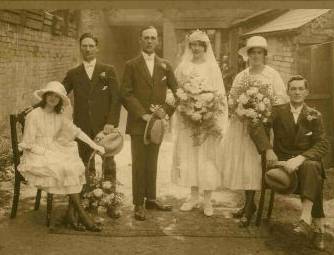 I once wrote a post on Religious vs. Civil Marriage that included a story of an elderly widower who was living with a widow without being married because they would lose their benefits if they married. The question of whether a secret marriage is permitted in such cases is addressed by Fr. Brian T. Mullady, O.P. in the November issue of Homiletic and Pastoral Review, a reputable priests' magazine now published by Ignatius Press and edited by Fr. Kenneth Baker, S.J.
In the column Questions Answered, a priest asks Fr. Mullady about a couple who asked if they could be married privately in the Church, but not bother about getting a marriage license from the State. The questioning priest said he told the couple that he could not marry them under those circumstances because marriage is a public event, not private.
Fr. Mullady concurs with the priest in his decision not to privately marry the couple so that they can avoid the establishment of civil effects. He describes several problems with a private (or almost secret) marriage. A summary of Fr. Mullady's comments follow.
Marriage is acknowledged by the Church to be an act with both religious and civil consequences, and a secret marriage can occur only in very rare instances when civil law is contrary to the natural law. A private marriage that is not registered with the State does not recognize the institution of marriage as the bulwark of the civil order and ignores the State's duty to protect and encourage stable marriages. Canon Law recognizes the normal jurisdiction of the State as contributing to the civil order and marriage. If the Church does not recognize the State's jurisdiction, the State can doubt whether the Church really wishes to give to Caesar the things which are his.
Furthermore, a private marriage undermines public perception of marriage and gives bad example when couples are seen to live together. Fr. Mullady concludes that "pastors [must] respect the requirements of the public registration of marriages by the civil law."
Remember that Fr. Mullady's answers were published in the same priests' magazine as the prior article by David R. Carlin that discussed whether religious marriages should be separated from civil marriages.
Jul 22, 2006
Marriage P_r_e_p_a_r _a __t___i __o__n
The Colorado Springs diocese insists that engaged couples tell the priest one year in advance that they want to be married. During that year couples pray, attend classes, meet with the pastor, are trained in natural family planning--good activities to increase the success rate of marriages and avoid divorces.
One parish in the Colorado Springs diocese has published a 15-page guide that shows the year's activities:
Fr. (Robert?) Kruse from Kansas City, MO argued strenuously in HPR that long waiting periods required by the Church for marriage were forbidden by Canon Law (the old one). [The current Code of Canon Law for the Latin Church became effective in 1983, and is a revision of the Codex juris canonici promulgated in 1917.]
Fr. Kruse reminded readers that Canon Law provided for marriages of Pacific islanders who were often without a priest for up to six months or more. The provision was that if a priest was not expected to visit the island for more than a reasonable amount of time, the couple could administer the sacrament to each other in a public ceremony. When the priest returned to the island, the marriage would be solemnized, blessed, and recorded.
In this regard, the current 1983 Code of Canon Law is similar to the 1917 edition. The length of time that a person must wait for a priest to officially witness a marriage is dealt with in Can. 1116, Sec. 1:
My second reservation to an extended wait time for marriage is that even good couples trying to maintain the virtue of chastity will likely fail. How easy it is to say--we are going to be married and we simply can't wait THAT LONG! If the couple begins to sleep together (or maybe already are), then how do they respond to the NFP program? Seems like the bride would think--"I don't want to walk down the aisle while pregnant." So she may choose to practice NFP before marriage, or maybe she thinks that she'll continue with her current birth control method and wait to try NFP later. Or maybe she and her fiancee will decide on a civil marriage 'cause it's faster and cheaper. An extended wait time for marriage is a can of worms, and I haven't even gotten halfway to the bottom of the can.
It is the American Bishops that have decided to implement extended wait times to eliminate bad marriages and divorce. I think there is an alternative to a long marriage prep time that will virtually guarantee at least a 90 percent chance of a successful marriage. See future posts.
One parish in the Colorado Springs diocese has published a 15-page guide that shows the year's activities:
Overview of the Marriage Preparation ProcessI have several reservations about the lengthy time of one year required for couples to prepare for marriage. My first concern is an apparent conflict with the current Code of Canon Law. The oldest priests' magazine in the U.S. is Homiletic & Pastoral Review (HPR) that had an article back in the 1970s on Church-required long engagement periods (at that time from 3 to 6 months). I remember the article aroused a lot of interest and argument.
1. Establish freedom to marry (pp. 3-5)
2. Begin the minimum six month preparation period (pp.5-6)
3. Paperwork (baptismal certificates, MA, MB forms, Covenant with the Parish,
dispensations, delegation,) (p.6)
4. Tentatively reserve the church (rehearsal and wedding time) (p.6)
5. FOCCUS inventory (p.6)
6. Engaged Couples Weekend (p.6)
7. Natural Family Planning (NFP) (p.7)
8. Meetings with FOCCUS couple (pp.6-7)
9. Formal Questions of the Pastor for both the bride and the groom (p.7)
10. Meetings with the Pastor (p.8)
11. Wedding planning session with the Pastor and Wedding Coordinator (p.8)
12. Payment Due to the Parish to lock in the firm date (p.8)
13. Rehearsal (p.8)
14. Wedding (pp.8-11)
15. Checklist (p.12)
16. Contact Information (p.13)
17. Covenant with the Parish (p.14)
Fr. (Robert?) Kruse from Kansas City, MO argued strenuously in HPR that long waiting periods required by the Church for marriage were forbidden by Canon Law (the old one). [The current Code of Canon Law for the Latin Church became effective in 1983, and is a revision of the Codex juris canonici promulgated in 1917.]
Fr. Kruse reminded readers that Canon Law provided for marriages of Pacific islanders who were often without a priest for up to six months or more. The provision was that if a priest was not expected to visit the island for more than a reasonable amount of time, the couple could administer the sacrament to each other in a public ceremony. When the priest returned to the island, the marriage would be solemnized, blessed, and recorded.
In this regard, the current 1983 Code of Canon Law is similar to the 1917 edition. The length of time that a person must wait for a priest to officially witness a marriage is dealt with in Can. 1116, Sec. 1:
If one who is competent to assist, cannot be present or be approached without grave inconvenience, those who intend to enter a true marriage can validly and lawfully contract in the presence of witnesses only:Thus, Canon Law does not require an extended wait time to marry. One month is considered the maximum time to wait for a priest-witness. The above mentioned canon is prudent in allowing a man and a woman to be validly and lawfully married without a priest, but in the presence of witnesses (family, friends, civil authority) if the couple must wait more than a month.
- in danger of death;
- apart from danger of death, provided it is prudently foreseen that this state of affairs will continue for a month.
My second reservation to an extended wait time for marriage is that even good couples trying to maintain the virtue of chastity will likely fail. How easy it is to say--we are going to be married and we simply can't wait THAT LONG! If the couple begins to sleep together (or maybe already are), then how do they respond to the NFP program? Seems like the bride would think--"I don't want to walk down the aisle while pregnant." So she may choose to practice NFP before marriage, or maybe she thinks that she'll continue with her current birth control method and wait to try NFP later. Or maybe she and her fiancee will decide on a civil marriage 'cause it's faster and cheaper. An extended wait time for marriage is a can of worms, and I haven't even gotten halfway to the bottom of the can.
It is the American Bishops that have decided to implement extended wait times to eliminate bad marriages and divorce. I think there is an alternative to a long marriage prep time that will virtually guarantee at least a 90 percent chance of a successful marriage. See future posts.
Feb 5, 2008
Going Steady
When I was young, I would have greatly resisted the idea of my parents telling me who to date or who should be my husband. They only told me not to date until I was 16 years old and not to date steadily until I was serious about marriage. I followed their rules and am very glad I did.
This post deals with "going steady" and the grave sins it frequently causes, perhaps including murder. My other posts on courtship and marriage have included:
The couple married in 2003 after the young man had joined the Army Reserve, and the young wife filed for divorce three years later. Now the young husband and father has been accused of murdering his wife and a child she had by another military man. What a sad story and what could have been done about it?
I suspect that young people today are never counseled about the dangers of going steady. Yet the Church's combat against steady dating in high school continued at least until 1963 when TIME magazine reported that Fr. James A. Carey mandated that any student "dating one person to the exclusion of all others shall be expelled." By 1964, it was reported in the social literature that "going steady is becoming increasingly common....There seems to be a growing tendency of daters to 'pair off' very early and for extended periods."
My generation was taught that going steady was reserved for persons who were able and ready for marriage. We were told that if we weren't mature, couldn't provide for a spouse, or had no intention of marrying in the near future, then we shouldn't go steady.
So what did I do? In high school and college, I dated guys for only two or three times, at max! At the time it was called "playing the field!" That extended the number of guys I dated before settling on my husband, and reduced the opportunities for intimacy that would have developed had I steadily dated a single guy. In other words, spiritual and physical problems were avoided.
Dating twenty, thirty, and even up to 100+ guys (a sister!) for short durations from age 16 to the time when marriage is possible can be quite helpful in choosing a spouse. You learn about the different characteristics (good and bad) of potential spouses. You learn what you like and what you don't. Most importantly, you don't make commitments or promises because you are not ready to make them. [Although there may be the problem of someone waiting forever for the "perfect spouse!"]
Catholic schools must again discourage "going steady" while students are in grade and high school. Social research proves that having a steady boyfriend or girlfriend as a young teenager significantly increases the odds of having sex. [Fr. Carey already knew this back in 1963--a good priest always hears a lot of sorrowful confessions.]
Right now, the Bishops are mostly concerned about those "living together outside the bond of marriage." Frankly, that sin--fornication-- is a primary effect of "going steady" when one is not ready or able to contract a good marriage.
Catholics must explain the disadvantages of steady dating and explain why the alternative of short-duration dates with different persons (group dating, too) is much more interesting and has better results.
Here are reasons not to have an exclusive relationship with the opposite sex while in pre-teen and even teenage years:
This post deals with "going steady" and the grave sins it frequently causes, perhaps including murder. My other posts on courtship and marriage have included:
- Marriage preparation in the Catholic Church
- How spouses were courted in the old culture of Bosnia-Herzegovina
- Matchmaking
- How my grandmother and grandfather were alone for the first time in a wagon while going to City Hall in Kansas City to obtain their marriage license
- How Church "Defenders of the Bond" of marriage have not done their job during the past 40 years
- Whether it's possible for the elderly to marry secretly to save their pensions
- On the advantages of separating religious and civil marriages
- The effect of Dignitas Connubi on Annulments
- The current State of the Union of Marriage in the US
The couple married in 2003 after the young man had joined the Army Reserve, and the young wife filed for divorce three years later. Now the young husband and father has been accused of murdering his wife and a child she had by another military man. What a sad story and what could have been done about it?
I suspect that young people today are never counseled about the dangers of going steady. Yet the Church's combat against steady dating in high school continued at least until 1963 when TIME magazine reported that Fr. James A. Carey mandated that any student "dating one person to the exclusion of all others shall be expelled."
 By 1964, it was reported in the social literature that "going steady is becoming increasingly common....There seems to be a growing tendency of daters to 'pair off' very early and for extended periods."
My generation was taught that going steady was reserved for persons who were able and ready for marriage. We were told that if we weren't mature, couldn't provide for a spouse, or had no intention of marrying in the near future, then we shouldn't go steady.
So what did I do? In high school and college, I dated guys for only two or three times, at max! At the time it was called "playing the field!" That extended the number of guys I dated before settling on my husband, and reduced the opportunities for intimacy that would have developed had I steadily dated a single guy. In other words, spiritual and physical problems were avoided.
Dating twenty, thirty, and even up to 100+ guys (a sister!) for short durations from age 16 to the time when marriage is possible can be quite helpful in choosing a spouse. You learn about the different characteristics (good and bad) of potential spouses. You learn what you like and what you don't. Most importantly, you don't make commitments or promises because you are not ready to make them. [Although there may be the problem of someone waiting forever for the "perfect spouse!"]
Catholic schools must again discourage "going steady" while students are in grade and high school. Social research proves that having a steady boyfriend or girlfriend as a young teenager significantly increases the odds of having sex. [Fr. Carey already knew this back in 1963--a good priest always hears a lot of sorrowful confessions.]
Right now, the Bishops are mostly concerned about those "living together outside the bond of marriage." Frankly, that sin--fornication-- is a primary effect of "going steady" when one is not ready or able to contract a good marriage.
Catholics must explain the disadvantages of steady dating and explain why the alternative of short-duration dates with different persons (group dating, too) is much more interesting and has better results.
Here are reasons not to have an exclusive relationship with the opposite sex while in pre-teen and even teenage years:
- You are much more likely to commit the sin of fornication (and possibly become pregnant with a baby)
- Steady dating is a proven high-risk behavior for catching sexually-transmitted diseases
- You will commit yourself to always explaining who you are with, why you didn't answer the phone, where you are going, how much money you have, etc.
- You will not improve your social abilities in new situations with others
- You will be obligated to spend most of your free time with the other party
- The two of you will likely withdraw to your own world and you will miss out on important times with friends
- Steady dating restricts you from responding to new social opportunities and developing an improved self-esteem
- Steady dating, without the ability to commit to marry within a short time period, leaves the girlfriend or the boyfriend fearful that the other will eventually leave them for another
- There are lots of repercussions when a romance is over that are similar to those of a marital break-up.
Nov 5, 2008
Proposition 8 Wins in California
 The second most important election result in the nation occurred in California where Proposition 8 won on November 4, 2008 to deal a huge blow to the gay rights movement. The painful loss (to homosexuals) marked the first time that voters rejected same-sex marriage in a state where it was already legal (because of imperial court decisions).
Over $75 million dollars was spent on this vital vote to stop California from redefining marriage and recognizing same-sex couplings. Opponents of the measure included the rich pro-homosexual community that out-fundraised conservative proponents of Proposition 8 by more than 5-to-1.
The fight to pass Proposition 8 was led by ProtectMarriage.com with a 4-member Executive Board that included: campaign chairman Ron Prentice; Edward Dolejsi, executive director of the California Catholic Conference; Mark Jansson, a member of The Church of Jesus Christ of Latter-day Saints; and Andrew Pugno, a lawyer for ProtectMarriage.com.
The Mormons were given credit by NPR as contributing nearly half the money to support Proposition 8 and more data on their personal contributions are given here. The good Catholic Knights of Columbus are on record as donating $1M. Catholic Bishops in California endorsed the measure through the California Catholic Conference by strongly encouraging members of the faith "to provide both the financial support and the volunteer efforts needed for the passage of Proposition 8."
An interesting story of this victory for traditional marriage is told from the perspective of a disappointed opponent of Proposition 8:
This is not a misprint: As California's Proposition 8 to ban safe-sex marriage headed for defeat, the Associated Press commissioned a poll rooted in age groups. Senior citizens were slightly in favor of permitting gay marriage among consenting adults, but the age 30-and-younger group was strongly opposed.The gay rights movement and same-sex marriage were also dealt a severe blow in Florida and Arizona where majority votes now protect the traditional definition of marriage.
No, we don't have it backwards. This is a case where older people are the most sympathetic and tolerant toward personal freedoms and individual rights, than are people in the up-and-coming generation. Isn't the reverse supposed to be typically true?
Furthermore, this ballot initiative is an amendment to the California State Constitution. Based on the attitudes of California's 30-and-younger population, it seems that Proposition 8 will remain embedded for generations to come.
What ever happened to free thinking among younger folks? How does this California anti-gay outlook manifest itself in comparison to the passion for "change" that was embodied in Barack Obama's campaign, which historically drew millions of young adults into political and social action for the first time?
These poll results are puzzling, but the Baltimore Sun --- which conducted the survey for the Associated Press --- is among the most respected and professional news operations in the nation.
Sep 9, 2006
Religious vs. Civil Marriage
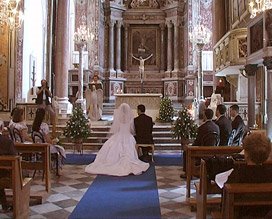 David R. Carlin is a former Senate Majority Leader of the Rhode Island Senate. He has written an article in the August/September 2006 issue of Homiletic & Pastoral Review advocating the separation of religious from civil weddings. Carlin proposes that Catholic priests abandon their practice of performing civil marriages because they conform to secularist ideas that allow same-sex weddings and divorce.
I thought of Carlin's recent article while talking to an elderly man at a luncheon held last week. He explained his wife had died about seven years ago and his next door neighbor's husband had died about the same time. The result was that the widower moved in with the widow without the benefit of marriage.
The elderly man explained that if they married, they would lose both medical and retirement benefits. His last comment was that they had discussed this situation with their family and friends and no one thought what they were doing was wrong. I suggested that perhaps they at least could have a small ceremony with family present. Frankly, I was thinking of the children and grandchildren who were seeing their parents and grandparents living together "in sin." Not a good example if you want to teach young people to avoid copying this lifestyle!
A civil marriage is authorized and recognized in the "eyes of the law," and a religious marriage is authorized and witnessed in the "eyes of God." Wikipedia has a fairly thorough discussion of the distinction between religious and civil weddings (that appears to have been partially written by a Catholic).
The Wikipedia article notes
there are examples of people who have a religious ceremony that is not recognized by the civil authorities. Examples include widows who stand to lose a pension if they remarry and so undergo a marriage only in the eyes of God and the community... retired couples who would lose pension benefits if legally married, ... and immigrants who do not wish to alert the immigration authorities that they are married either to a spouse they are leaving behind or because the complexity of immigration laws may make it difficult for spouses to visit on a tourist visa.
So, is it possible for a priest of the Catholic Church in the U.S. to witness a sacramental marriage between couples who do not want to be married civilly? Can a religious wedding occur independently of a civil marriage in U.S. states? Does anyone want to volunteer answers to these questions?
Aug 21, 2006
Dignitas Connubi (DC) and Annulments
The purpose of the
So how goes the implementation of DC? Is the new
The 4-day conference program identifies two presentations on marriage. The first one deals with “Negligence, Dolus, and Personal Canonical Liability in Tribunals.” Apparently DC explicitly allows for legal actions for personal damages against tribunal personnel in case of their negligence. The CLSA is clearly concerned about being sued for damages that could be considerable, particularly if they involve reimbursing wedding expenses.
The second presentation considers the bonum coniugum as an essential element of marriage and as a possible exclusion in the processing of a marriage nullity case.
Jul 30, 2006
The Third Match (Bosnia and Herzegovina)
Fr. Ivo Sivric's 1982 book, The Peasant Culture of Bosnia and Herzegovina, describes Catholic courtship and marriage in a poor, mountainous region of what was Yugoslavia. I've reviewed another part of the book in a previous post.
Sunday afternoons are for the purposes of diversion, entertainment, and courtship of the peasants. Fr. Sivric notes that one of the favorite songs of the region contains the words, "At the gathering after Sunday Mass, a girl appealed to me." Gatherings of young people also take place during the long autumn and winter evenings, when they are expected to work on special projects together, such as husking corn. These social gatherings are filled with "singing songs, telling jokes and stories, and reciting epic poems." The boys refer to these gatherings as girl-searching-and-watching parties. The boys are always urged to marry girls they know well.
Christmas is a special time for courtship because of the special religious celebrations that are arranged in the different towns. After Mass, the adults talk and the boys throw apples at the girls in which they are interested. A girl shows her interest in a particular boy by trying to catch his apple. The apple-throwing is accompanied by circle dances that are lively and loud. Parents watch from a distance.
The young people choose whom they wish to marry. Peasant sons are reminded by their parents to judge a girl by her mother, and girls are told that "integrity marries a girl off." Engagements are solemnly performed in the presence of a priest, and are preceded by a visit of the bridegroom's father, uncle, and one or two villagers to the home of the girl's parents. This meeting ends with an interview of the girl to determine whether she is freely willing to wed.
The bride is the center of attention through the engagement period, the two- or three-day wedding feast and during the weeks following the wedding. She is reminded of how much she is loved and how she is expected to sow this love as a main respondibility of her wifely vocation. Great meaning is attached to sexual intimacy, and premarital relations are regarded as immoral. If pre-marital intimacy occurs, the couple is committed to marriage, especially if a child is born.
Marriage in this peasant culture serves as "a means to perpetuate and embody humanity and Christianity." The ancient social customs surrounding courtship, engagement, and marriage produce a low number of divorces and marital infidelities in this peasant region.
Sunday afternoons are for the purposes of diversion, entertainment, and courtship of the peasants. Fr. Sivric notes that one of the favorite songs of the region contains the words, "At the gathering after Sunday Mass, a girl appealed to me." Gatherings of young people also take place during the long autumn and winter evenings, when they are expected to work on special projects together, such as husking corn. These social gatherings are filled with "singing songs, telling jokes and stories, and reciting epic poems." The boys refer to these gatherings as girl-searching-and-watching parties. The boys are always urged to marry girls they know well.
Christmas is a special time for courtship because of the special religious celebrations that are arranged in the different towns. After Mass, the adults talk and the boys throw apples at the girls in which they are interested. A girl shows her interest in a particular boy by trying to catch his apple. The apple-throwing is accompanied by circle dances that are lively and loud. Parents watch from a distance.
The young people choose whom they wish to marry. Peasant sons are reminded by their parents to judge a girl by her mother, and girls are told that "integrity marries a girl off." Engagements are solemnly performed in the presence of a priest, and are preceded by a visit of the bridegroom's father, uncle, and one or two villagers to the home of the girl's parents. This meeting ends with an interview of the girl to determine whether she is freely willing to wed.
The bride is the center of attention through the engagement period, the two- or three-day wedding feast and during the weeks following the wedding. She is reminded of how much she is loved and how she is expected to sow this love as a main respondibility of her wifely vocation. Great meaning is attached to sexual intimacy, and premarital relations are regarded as immoral. If pre-marital intimacy occurs, the couple is committed to marriage, especially if a child is born.
Marriage in this peasant culture serves as "a means to perpetuate and embody humanity and Christianity." The ancient social customs surrounding courtship, engagement, and marriage produce a low number of divorces and marital infidelities in this peasant region.
Jul 22, 2006
The First Match
This is the first story I remember hearing about matchmaking, an old and quite successful way for societies to match couples for marriage. It is important to remember that friends and relatives (and paid matchmakers) desire a successful marriage. In the cases I know, an individual can veto the selection of the matchmaker--who then observes the reason for the mismatch and finds a more suitable candidate. More about this, later.
My Grandma told me she and Grandpa were alone together for the first time when they traveled in a horse and buggy to City Hall to get a marriage license. Grandma was 17 years old and Grandpa was almost ten years older. He had been looking for a wife and friends told him about a young girl recently arrived from the 'old country.'
Grandma had left her mother to join her father who had come to Kansas City some years earlier. He did not know his oldest daughter was coming until she sent a letter from Chicago announcing her arrival in the U.S. Grandpa lived in a rented room, possibly with other single men who also worked in the Kansas City stockyards. Grandma had to obtain separate sleeping quarters that was an extra expense to her father. The solution was simple--Grandma was beautiful and could be easily married.
The ladies in the boarding house and the people at church served as matchmakers for the couple. Grandpa got a beautiful young woman who was trained as a seamstress for his bride and Grandma got a hard-working husband who had already saved $800. Within a few months, the couple were married at an ethnic parish in Kansas City, Kansas. The marriage produced five children and ended when Grandpa died. Grandma never remarried.
My Grandma told me she and Grandpa were alone together for the first time when they traveled in a horse and buggy to City Hall to get a marriage license. Grandma was 17 years old and Grandpa was almost ten years older. He had been looking for a wife and friends told him about a young girl recently arrived from the 'old country.'
Grandma had left her mother to join her father who had come to Kansas City some years earlier. He did not know his oldest daughter was coming until she sent a letter from Chicago announcing her arrival in the U.S. Grandpa lived in a rented room, possibly with other single men who also worked in the Kansas City stockyards. Grandma had to obtain separate sleeping quarters that was an extra expense to her father. The solution was simple--Grandma was beautiful and could be easily married.
The ladies in the boarding house and the people at church served as matchmakers for the couple. Grandpa got a beautiful young woman who was trained as a seamstress for his bride and Grandma got a hard-working husband who had already saved $800. Within a few months, the couple were married at an ethnic parish in Kansas City, Kansas. The marriage produced five children and ended when Grandpa died. Grandma never remarried.
Aug 13, 2009
Fornication
 I've just learned that young 'Joe' at work was asled by a young co-worker, 'Joan,' if she could rent a room in his apartment. Of course, he seemed quite interested in being the roommate of this young, intelligent, and beautiful college graduate.
Why is it unwise for unmarried persons of the opposite sex to live together? This question would have been laughed at with ridicule fifty years ago when I was about the same age as the two young persons described above! My college dormitory classmates knew the reasons why they shouldn't sleep in the same apartment with a man--it wasn't necessary to inform them why it was a bad idea. But in the past 30 years, I've known several young women who moved in with young men, and all of them ended up sleeping with their new boyfriends. Only one seemed not to have rued her fornication.
I knew of only one college classmate who become pregnant "out of wedlock", the term used for illegitimate parenthood. Naturally she married the young father of her child. [BTW, most of the girls in our hall claimed to be virgins and almost all ended up in stable marriages).
I had intended to present some of the reasons why "Joan" should not rent a room in "Joe's" apartment (i.e., why fornication is bad). But John C. Wright (my favorite blogger) has provided more information (some sentences are mischievously written) than I could ever imagine.
"The question confronting me was whether one’s eventual spouse, even before you ever meet him, even before you know if he exists, has an interest in your sexual behavior and misbehavior, and in the condition of your habits of virtue, which law and custom ought to protect?"See Wright's recent series comparing the Libertine outlook with the Christian logic on marriage, fornication, third partners, GLBT, etc. Wright's four-part blog on APOLOGIA PRO OPERE SUIS, may become chapters from a new book that will make him (in my opinion) a worthy successor of the great Christian apologist, C.S. Lewis (who also was an atheist):
Anyone knowing my history knows that I came to the Christian religion [Wright entered the Catholic Church in 2007] after I became convinced of the logic of chastity (or intolerance, as it is called in the anti-conceptual jargon of PC), not before. I did not become pro-marriage (or homophobic, as it is called) because I am a Christian; I became a Christian because I am pro-marriage.Now begin at the beginning of Wright's series, "Preliminary Comments" in Part I.
I made the claim that I used to be a member of the Sexual Revolution, like them, and had believed for most of my life that whatever two consenting adults did in the privacy of their bedroom (or on their kitchen floor, depending) provided it harmed no other, was no concern of their neighbors, and not a proper object for either legal sanction or social disapproval. All harmless sexual acts were licit.
Over a period of years, and very much against my natural inclination, I was driven by logical arguments out of this position and into a more conservative and traditional view of sexual morality. Neither my motives were religious, nor was the argument. I was not merely an atheist at the time, I was a vituperative, proselytizing, bitterly zealous atheist. To call my motives Christian is beyond untrue, beyond comical, and deep into the territory of being absurd.
Jan 9, 2008
"The Devil's Advocate" and "Defender of the Bond"
 The Church must exercise 'greater caution and more accuracy' in the process for beatification and canonization of new saints, according to the head of the Vatican Congregation for Saints' Causes. Cardinal Jose Saraiva Martins stated in Osservatore Romano (January 8, 2008) that more precision is needed in diocesan procedures that open and advance sainthood for particular individuals. The Cardinal's desk, stated one news article in October 2007, "has turned into a frequent-flyer assignment", as he represents the the Pope at many different canonization ceremonies around the world.
I'm happy to see the tightening up of canonization procedures that good Cardinal Silvio Oddi once called a "saint factory." Since the time of Pope Sixtus V in the 16th century, well over half the new saints were canonized under the direction of Pope John Paul II. Sometimes it seemed that ideological, political, and other interests were able to push through beatifications and canonizations in record time.
Here are the statistics from Catholic Online that show the unprecedented explosion of saints under Pope John Paul II. Compare these numbers to the 296 total saints who were canonized in the 400+ years before his pontificate.
Beatifications and Canonizations in the Pontificate of John Paul II | |||||
Ceremonies | Martyrs | Confessors | Total | ||
Beatification Ceremonies | 147 | 1.032 | 306 | 1.338 | |
Canonization Ceremonies | 51 | 402 | 80 | 482 | |
Statistics: Ceremonies in Rome - Ceremonies in Italia outside of Rome - Ceremonies outside of Italy during Apostolic Voyages [Italian] | |||||
The position and duties of the Devil's Advocate (Advocatus Diaboli), whose job it is to attack the integrity of the proposed saint, may be restored if I read the Vatican report correctly. This person is described by the Catholic Encyclopedia as:
...one of the most important officers of the Sacred Congregation of Rites, established in 1587, by Sixtus V, to deal juridically with processes of beatification and canonization. His official title is Promoter of the Faith (Promotor Fidei). His duty requires him to prepare in writing all possible arguments, even at times seemingly slight, against the raising of any one to the honours of the altar. The interest and honour of the Church are concerned in preventing any one from receiving those honours whose death is not juridically proved to have been "precious in the sight of God"...We next need to see the position of Defensor matrimonii (defender of the bond) restored. This would allow a more precise and consistent analysis to determine whether the bond of marriage exists in a case before the diocesan marriage tribunal.
Back in the 70's, I remember one priest who loudly asked at a public meeting, "WHERE is the defender of the bond?!" His rage was expressed after a discussion of the many annulments being granted. At the time we knew that virtually all applications for annulments were being approved, and it seemed there was always some new reason identified as a serious defect in the marriage under consideration that prevented it from being recognized as valid. I even remember one woman (RIP) who told me that her husband received an annulment, but she was not aware of it until several years later when she confronted the priest who was giving Holy Communion to her husband who had remarried.
Do I want to see a return to the days when only two canonizations took place under a papacy? NO! Clearly these and recent times indicate there are likely more than a few great saints who should be canonized each year. Yet the procedures must be strict and carefully followed, including carrying out those necessary duties performed by the "Devil's Advocate."
The same as for hearing and granting annulment petitions. Diocesan procedures need to be tightened so that the Church can begin to restore credibility to the annulment process. In other words, let the "defender of the bond" do his necessary job. Yet there appears to be good reasons why more annulments should be granted than during the 1940s and 1950s.
Aug 1, 2006
Matches = Matchmaking
Five posts now have been written on matchmaking--The Tangled Thread, The First Match, The Second Match, The Third Match, and Marriage Preparation. The system for choosing a spouse in the U.S. has not worked very well over the past 50 years, as described in Marriage Trends Look Bleak. Better ways to achieve successful marriages are needed.
This series of Matchbooks looks at successful courtship and marriage in the past, as contrasted with unsuccessful systems of today. More Matchbooks are coming. Watch for them.
This series of Matchbooks looks at successful courtship and marriage in the past, as contrasted with unsuccessful systems of today. More Matchbooks are coming. Watch for them.
Jul 22, 2006
The Second Match
More than 25 years ago, I traveled to Washington, DC on business with a young man from India. The second (or third day) of meetings ended earlier than expected and we found ourselves with about five or six hours to kill before catching the plane back to Kansas City.
Washington has great museums and both of us wanted to see the National Aeronautical and Space Museum. We walked through the exhibits and finally decided to see the large screen movie. My co-worker was quiet until the film showed India, his native land. Then he whispered that the pictures showed the area he was born. Finally he exclaimed, "Oh, I wish my wife could be here--that's her town!" He added that he really missed his wife. My co-worker was clearly very much in love with his wife whom he had married less than a year before. I asked him how he had met his wife and he told me this story.
His parents still lived in India and their intelligent and ambitious son came to the U.S. for advanced study and to work. The family was determined he should marry a young woman from India. Some of the specifications for the bride were that she should be attractive, of the same ethnic group, and should also have advanced education.
My co-worker explained there is a network of matchmakers in India and around the world. [Google "India" and "matchmaker." You'll get lots of hits.] My companion found his bride in British Columbia. She was the daughter of a banker, was pretty (he said), and was well-educated. Her parents also had hired a matchmaker to find her a husband from India. They wanted a well-educated son-in-law who had immigrated to the U.S. or Canada. The proposed match was made by long-distance phone calls between India, British Columbia, and Kansas City.
The couple were introduced (at a party, if I remember correctly) and allowed to date and meet each others' families, until they determined whether they found themselves compatible. My co-worker said this period was a time to get to know more about whether the other person would be a good spouse. When I asked if matchmakers made mistakes, he said that it was rare because so much work was done to insure that a match was a good one before the couple met. I also asked if he or his wife could have backed out of the arranged marriage. He answered that either one always had a veto power if he/she saw that there would not be a good marriage.
My co-worker insisted repeatedly that couples naturally love each other in marriage if they are compatible. He said both he and his wife quickly 'fell in love' after they were married.
Washington has great museums and both of us wanted to see the National Aeronautical and Space Museum. We walked through the exhibits and finally decided to see the large screen movie. My co-worker was quiet until the film showed India, his native land. Then he whispered that the pictures showed the area he was born. Finally he exclaimed, "Oh, I wish my wife could be here--that's her town!" He added that he really missed his wife. My co-worker was clearly very much in love with his wife whom he had married less than a year before. I asked him how he had met his wife and he told me this story.
His parents still lived in India and their intelligent and ambitious son came to the U.S. for advanced study and to work. The family was determined he should marry a young woman from India. Some of the specifications for the bride were that she should be attractive, of the same ethnic group, and should also have advanced education.
My co-worker explained there is a network of matchmakers in India and around the world. [Google "India" and "matchmaker." You'll get lots of hits.] My companion found his bride in British Columbia. She was the daughter of a banker, was pretty (he said), and was well-educated. Her parents also had hired a matchmaker to find her a husband from India. They wanted a well-educated son-in-law who had immigrated to the U.S. or Canada. The proposed match was made by long-distance phone calls between India, British Columbia, and Kansas City.
The couple were introduced (at a party, if I remember correctly) and allowed to date and meet each others' families, until they determined whether they found themselves compatible. My co-worker said this period was a time to get to know more about whether the other person would be a good spouse. When I asked if matchmakers made mistakes, he said that it was rare because so much work was done to insure that a match was a good one before the couple met. I also asked if he or his wife could have backed out of the arranged marriage. He answered that either one always had a veto power if he/she saw that there would not be a good marriage.
My co-worker insisted repeatedly that couples naturally love each other in marriage if they are compatible. He said both he and his wife quickly 'fell in love' after they were married.
Aug 3, 2007
Fallen-Away Catholics
Most of you have probably met Catholics who have fallen away from the Church. Frequently, they began to reject Catholicism by becoming angry with a priest, or becoming upset by money handling in the Church, or any of a hundred other reasons.
I've talked twice with J., an old man (my age!), and he told me today that he is a fallen-away Catholic. He is disgusted by the priests' sexual scandals of the past few years, but I concluded he left the Church a long time before the scandals made the headlines. J. added that he wasn't sure he now believed everything the Church teaches (perhaps another indication that his departure is of some duration). Yet he noted that he could never join another church because he would always consider himself a Catholic. Finally, J. mentioned that if a priest cousin from another area were to be in Kansas City, he would go to Mass every Sunday to hear his excellent sermons!
Whatever the reason (excuse!) for losing his faith, J.'s rejection of the Church MAY have begun, as so often happens, by rejecting the 6th and 9th Commandments. It is so difficult to admit that one is sinning when it feels so good and seems so right!
There are a lot of arguments to justify sinful sexual behaviors. "It's my nature and only natural to do it." "No one is being hurt." "This is such a small sin in comparison to the sin of hatred." "No one can obey these commandments, so why even try." "Jesus really didn't mean what He said." After sufficiently ruminating over different variations of these excuses, a person's conscience becomes twisted, he concludes the Church is wrong, and he leaves the Church.
Sometimes, God's grace is restored and a person become aware of the spiritual battle for his soul that is inherent in sexual temptations. He realizes he is excusing his sins, but God isn't! When he admits "through my fault, through my fault, through my most grievous fault", and asks for God's mercy, he can begin to be truly repentant.
Sexual temptations and falling into sins make a person uncomfortably aware of his fallibility--his lack of strength. A person cannot rely on his own strength in repelling this kind of sin. In fact, the Church teaches we must always run away from a sexual temptation; we must never stop and consider the temptation even in order to fight it.
Sexual sins can become the occasion for the virtue of humility--I blew it again, God! Only when we are so humble that we admit we are powerless without God, can His grace enter to change a life. A wise person recognizes this for the remainder of his time on earth.
The only persons represented in the four Gospels who really pleased Jesus Christ were repentant sinners. First was the man in the parable who stayed in the back of the temple, with his eyes cast down and confessing he was unworthy. Second was the man who told Jesus, "I am not worthy that Thou should come unto my roof; but say the word and my servant will be healed." Third was St. Dismas who hung on the cross next to Jesus and who admitted he deserved his crucifixion because of his crimes, but nevertheless, begged Jesus in a great act of faith to remember him when he came into his kingdom. Jesus' response was that "This day you will be with me in paradise." Quite a reward after a man's bad life, but one that was entirely mitigated by acknowledging personal sins and pleading for mercy from Jesus!
When I was young, my parents lived next door to Mr. & Mrs. M. They were Catholics who had rejected the Church's teaching on the permanence of marriage, and their "marriage" was not true in the sight of God. For many years, they lived together as man and wife. Yet I always saw them at Sunday Mass where they sat in a middle pew on the left side of the Church, even though they never received Holy Communion. On Thursday evenings, we attended Novena devotions and Mr. & Mrs. M also were always there.
I asked my Mother about their situation, and was told Mr. & Mrs. M. were living in sin, but could find no way out of their situation because of a child they both needed to care for. The priest was gentle, but firm, in saying they were to hope in God's mercy by otherwise living a good life. The pastor encouraged the couple to come to him in the confessional where he would encourage them and guide them in spiritual practices and good works. However, their sins were never able to be forgiven because they continued to live together.
Many years later, Mr. & Mrs. M began to receive Holy Communion, and I asked Mother what had happened. She answered they were now old and the pastor had accepted the practicality of their desire to live together in the same house, but only as brother and sister.
Both Mr. & Mrs. M were kind and generous people. Mrs. M took care of her sick and very difficult-to-care-for mother for several years before the mother died. My own Mother thought Mrs. M behaved as a saint in this long trial. Mr. M was always first to help his neighbors, and the whole neighborhood missed them when they died. Both Mr. & Mrs M. left this world and were buried in full communion with the Church, even though their original spouses still lived. God's mercy prevailed for poor, humble, and repentant sinners!
I've talked twice with J., an old man (my age!), and he told me today that he is a fallen-away Catholic. He is disgusted by the priests' sexual scandals of the past few years, but I concluded he left the Church a long time before the scandals made the headlines. J. added that he wasn't sure he now believed everything the Church teaches (perhaps another indication that his departure is of some duration). Yet he noted that he could never join another church because he would always consider himself a Catholic. Finally, J. mentioned that if a priest cousin from another area were to be in Kansas City, he would go to Mass every Sunday to hear his excellent sermons!
Whatever the reason (excuse!) for losing his faith, J.'s rejection of the Church MAY have begun, as so often happens, by rejecting the 6th and 9th Commandments. It is so difficult to admit that one is sinning when it feels so good and seems so right!
There are a lot of arguments to justify sinful sexual behaviors. "It's my nature and only natural to do it." "No one is being hurt." "This is such a small sin in comparison to the sin of hatred." "No one can obey these commandments, so why even try." "Jesus really didn't mean what He said." After sufficiently ruminating over different variations of these excuses, a person's conscience becomes twisted, he concludes the Church is wrong, and he leaves the Church.
Sometimes, God's grace is restored and a person become aware of the spiritual battle for his soul that is inherent in sexual temptations. He realizes he is excusing his sins, but God isn't! When he admits "through my fault, through my fault, through my most grievous fault", and asks for God's mercy, he can begin to be truly repentant.
Sexual temptations and falling into sins make a person uncomfortably aware of his fallibility--his lack of strength. A person cannot rely on his own strength in repelling this kind of sin. In fact, the Church teaches we must always run away from a sexual temptation; we must never stop and consider the temptation even in order to fight it.
Sexual sins can become the occasion for the virtue of humility--I blew it again, God! Only when we are so humble that we admit we are powerless without God, can His grace enter to change a life. A wise person recognizes this for the remainder of his time on earth.
The only persons represented in the four Gospels who really pleased Jesus Christ were repentant sinners. First was the man in the parable who stayed in the back of the temple, with his eyes cast down and confessing he was unworthy. Second was the man who told Jesus, "I am not worthy that Thou should come unto my roof; but say the word and my servant will be healed." Third was St. Dismas who hung on the cross next to Jesus and who admitted he deserved his crucifixion because of his crimes, but nevertheless, begged Jesus in a great act of faith to remember him when he came into his kingdom. Jesus' response was that "This day you will be with me in paradise." Quite a reward after a man's bad life, but one that was entirely mitigated by acknowledging personal sins and pleading for mercy from Jesus!
When I was young, my parents lived next door to Mr. & Mrs. M. They were Catholics who had rejected the Church's teaching on the permanence of marriage, and their "marriage" was not true in the sight of God. For many years, they lived together as man and wife. Yet I always saw them at Sunday Mass where they sat in a middle pew on the left side of the Church, even though they never received Holy Communion. On Thursday evenings, we attended Novena devotions and Mr. & Mrs. M also were always there.
I asked my Mother about their situation, and was told Mr. & Mrs. M. were living in sin, but could find no way out of their situation because of a child they both needed to care for. The priest was gentle, but firm, in saying they were to hope in God's mercy by otherwise living a good life. The pastor encouraged the couple to come to him in the confessional where he would encourage them and guide them in spiritual practices and good works. However, their sins were never able to be forgiven because they continued to live together.
Many years later, Mr. & Mrs. M began to receive Holy Communion, and I asked Mother what had happened. She answered they were now old and the pastor had accepted the practicality of their desire to live together in the same house, but only as brother and sister.
Both Mr. & Mrs. M were kind and generous people. Mrs. M took care of her sick and very difficult-to-care-for mother for several years before the mother died. My own Mother thought Mrs. M behaved as a saint in this long trial. Mr. M was always first to help his neighbors, and the whole neighborhood missed them when they died. Both Mr. & Mrs M. left this world and were buried in full communion with the Church, even though their original spouses still lived. God's mercy prevailed for poor, humble, and repentant sinners!
Nov 26, 2006
Two Church Letters on Homosexuality
Cardinal Sean O'Malley has a blog where his letter on homosexuality issued November 23 was published. Here are portions from his letter.
Contrast Cardinal O'Malley's letter with one published by Pope Pius V on August 30, 1568 "Against any cleric whosoever, secular or regular, who are guilty of a heinous crime."
The Church’s efforts to defend the institution of marriage has been interpreted by some as an indication of the Church’s hostility toward homosexual persons....The full communication by Cardinal O'Malley is published here, and you will notice a glaring omission--not one word is said about homosexual priests in the Catholic Church in Boston.
Right from the beginning of this controversy [sic] I have called on all Catholics to rally behind the cause of marriage....
The Church’s position is not based on an animus against people with a homosexual orientation. Each and every member of the Church is called to holiness regardless of their sexual orientation. The Church has often warned against defining people by their sexual orientation in a way that diminishes their humanity....
We do not want Catholics who have a homosexual orientation to feel unwelcomed in the Catholic Church. We remind them that they are bound to us by their baptism and are called to live a life of holiness. Many homosexual persons in our Church lead holy lives and make an outstanding contribution to the life of the Church by their service, generosity and the sharing of their spiritual gifts....
We must strive to eradicate prejudices against people with a homosexual orientation. At the same time the Church must minister to all people by challenging them to obey God’s commands, the roadmap for a meaningful human life that allows us to draw near to God and to one another.
Contrast Cardinal O'Malley's letter with one published by Pope Pius V on August 30, 1568 "Against any cleric whosoever, secular or regular, who are guilty of a heinous crime."
A ghastly crime, by which the joined (papal) states were polluted enflamed by God’s fearful judgment, flares up our bitter sorrow, and gravely moves our soul so that we lend now our attentions to repress it as much as possible.Did you notice the differences between of the two letters?
1. It was properly denoted by the Lateran Council, that whatsoever Cleric will have been discovered to suffer from that incontinence which is against nature, on account of which the wrath of God falls upon the sons of disobedience (cf. Vulg. Eph. 5,6), is to be ejected from the ranks of the clergy and be reduced to do penance in a monastery.
2. But lest the contagion of such a scourge, from the hope of impunity which is the greatest lure of sinning, more confidently grows in power, We determine that clerics guilty of this execrable crime are to be quite gravely punished, so that whoever does not abhor the ruination of the soul, the avenging secular sword of civil laws will certainly deter.
3. And thus because We have made a decree in this matter at the beginning of Our Pontificate, now in a fuller and stronger way intending it to be followed strictly, every and all priests, whoever they are, and other secular clerics, and regular clerics of any grade and dignity, busy at such a detestable monstrosity, We deprive of every clerical privilege, every office, dignity, and ecclesiastical benefice by authority of the present legal instrument. So it is enacted that once they are degraded by the Ecclesiastical Judge, they be handed over immediately to the secular arm, which will exact upon them the same (death) penalty, which is ascertained to have been constituted by legitimate sanctions against laymen who have slid down into this ruin. Nothing to the contrary withstanding, etc.
Jul 15, 2007
Sexual Freedom, from a Unusual Perspective
John C. Wright is arguing about sex--and what magnificent truths he uses to whiplash the error of sexual freedom. See his most recent post, Arguements in favor of cheap women and Sex, Lies, and Shooting at the Cat, that discusses
Men who cannot keep their trousers up and women who cannot keep their skirts down.Also don't miss the earlier post, Witnesses for the Defense, that begins with the statement
Back when I was a fun-loving, God-hating atheist, logic forced me to the conclusion that the passions of man, including sexual passions, were destructive of happiness and life unless conformed into the boundaries of reality.and ends with reminders from historical religions and ethical systems on the great evils caused by sex unbound from marriage.
Jan 7, 2009
With My Evolving Grandchildren
This is my week to deal with the Evolution of Mankind from lower ages to higher. Their parents are on vacation to celebrate almost 20 years of marriage, and I am babysitting for four young people in grade and high schools. Fortunately the oldest one drives and furnishes transportation for the others, so I have stayed home and kept house, including washing lots of clothes. A bad cold means I am generously using the $$ left by the parents to buy dinners rather than make them--although homemade burritos is on tonight's menu.
The grocery store provided an opportunity to pick up a magazine to read. UNTIL I discovered that ALL the articles in the January issue of Scientific American are devoted to "The Most Powerful Idea in Science." At least ten articles promote and defend the theory of the evolution of mankind from lower organisms.
I concluded that the SciAm issue was written in response to the movie, EXPELLED: NO INTELLIGENCE ALLOWED, in which Ben Stein questions both people who believe and disbelieve in the theory of the evolution of man. Stein's subdued, yet penetrating questions and the resulting answers easily show why the theory should be doubted. Most importantly, the documentary demonstrates how scientists who disagree with the theory of evolution--no matter how well qualified, are freqently prohibited from continuing to teach and to publish.
So last night all five of us watched Ben Stein's movie, EXPELLED. The grandkids learned how important it is to question and then listen carefully to the answers from more than one side before believing what scientists say and write. We all laughed as a primary proponent of the evolution of mankind claimed that life could have been 'seeded' on earth by a greater intelligence from some other world--yet that greater intelligence could not be God. The kids were shocked at the demonstrated hatred (of God and imperfect human beings) by some of the proponents of evolution.
The grandkids need to thank their Uncle D who was so generous in buying multiple copies of the video for all his nieces and nephews. The video is an excellent start in training students in justifiable skepticism of scientists who have agendas (funding, political, social, and irreligious) that interfere with honest scientific research.
The grocery store provided an opportunity to pick up a magazine to read. UNTIL I discovered that ALL the articles in the January issue of Scientific American
 are devoted to "The Most Powerful Idea in Science." At least ten articles promote and defend the theory of the evolution of mankind from lower organisms.
I concluded that the SciAm issue was written in response to the movie, EXPELLED: NO INTELLIGENCE ALLOWED, in which Ben Stein questions both people who believe and disbelieve in the theory of the evolution of man. Stein's subdued, yet penetrating questions and the resulting answers easily show why the theory should be doubted. Most importantly, the documentary demonstrates how scientists who disagree with the theory of evolution--no matter how well qualified, are freqently prohibited from continuing to teach and to publish.
So last night all five of us watched Ben Stein's movie, EXPELLED. The grandkids learned how important it is to question and then listen carefully to the answers from more than one side before believing what scientists say and write. We all laughed as a primary proponent of the evolution of mankind claimed that life could have been 'seeded' on earth by a greater intelligence from some other world--yet that greater intelligence could not be God. The kids were shocked at the demonstrated hatred (of God and imperfect human beings) by some of the proponents of evolution.
The grandkids need to thank their Uncle D who was so generous in buying multiple copies of the video for all his nieces and nephews. The video is an excellent start in training students in justifiable skepticism of scientists who have agendas (funding, political, social, and irreligious) that interfere with honest scientific research.
Jul 7, 2007
Scorecard for Kansas City Bishops
Since 1968, a scorecard that rated performance for most Kansas City Catholic Bishops would have been marked with many deficiencies, justifying grades of "D" and "F". However, almsgiving was not lost during the past 40 years as the Church continued its beautiful work for the poor. [Unfortunately, 'love' also was used by some Bishops to justify the extinction of common sense, as could be seen when examining lists of grantees and expenses receiving diocesan 'charitable' funds.]
Fortunately, the current two Bishops (Bishop Robert W. Finn and Archbishop Joseph F. Naumann) of Greater Kansas City deserve much, much better grades than most recent KC Bishops. I wish I had started to summarize their accomplishments when each Bishop took charge, but I really thought they did not have what was needed to dig the Church out of the pit of Modernism. However, the list of our current Bishops' good and faithful works gets longer and longer.
1. The Leaven and The Catholic Key diocesan newspapers are much improved. [Lots could be said in support of this conclusion--perhaps in a future post. The Key is now better than The Leaven, in my opinion.]
2. The diocesan leaderships are no longer hotbeds of dissent, even if some local parishes and 'Catholic' colleges remain bulwarks of Modernism.
3. The Bishops acknowledge and support the contributions and aspirations of traditional Catholics, even giving churches for the offering of the old Latin Mass and allowing FSSP and ICKSP priests to serve as chaplains.
4. Bishop Finn shows character, strength, and wisdom when dealing with dissenters. ['Nuff said!]
5. Archbishop Naumann seems to have taken a quieter approach in handling dissenters, but the results also seem fairly good, as diocesan Masses seem less 'experimental' than before. [Interestingly, I've observed two Kansas parishes where people were invited to kneel at the beginning of Mass where they ask God for forgiveness of their sins. I assume Archbishop Naumann is responsible for this welcome 'innovation.']
6. Archbishop Naumann and Bishop Finn are both strong pro-life supporters. Almost every week, their diocesan newspapers have an article or two on the life issues, and Archbishop Naumann usually leads a monthly rosary march to the abortion clinic in Kansas City, KS. In addition, both Bishops lead efforts to ban harvesting of stem cells from aborted infants, and Archbishop Naumann sponsored the production of a stem cell video to encourage opposition to the practice.
7. Bishop Finn has recruited the Benedictine Sisters of Mary, Queen of the Apostles, a traditional group of Catholic nuns, and is extending considerable support and encouragement to them.
8. Both Bishops recognize the evil of pornography and have organized programs to combat it.
9. Archbishop Naumann, a member of the Bishops' Committee on Marriage and Family Life, appears to recognize the great danger to the Church of the loss of over 50 percent of Catholic marriages. See my related post.
10. Archbishop Naumann has written many good columns in The Leaven that teach Catholic doctrine and that address thorny issues, such as contraception, 'free' love, and confession.
11. The two Bishops jointly sponsored the Annual Corpus Christi procession from St. Thomas More Church to Avila College, emphasizing Catholic belief in transubstantiation of the bread and wine into the Body and Blood of Jesus Christ.
12. Bishop Finn has appointed faithful stewards of Catholic teaching to key roles in his diocese.
13. Both Bishops are working very hard and successfully to get religious vocations. Bishop Finn just announced that the Missouri diocese now has 25 seminarians. He promoted a diocesan observance of 30 Days of Prayer to St. Joseph for vocations that ended when he led a pilgrimage to St. Joseph's Oratory of Mount Royal in Montreal, Quebec. [It's heartening to see Bishop Finn is not afraid to get on his knees! Photo from The Key.]
14. Archbishop Naumann recognizes the importance of serving the homeschooling community. The Savior Pastoral Center was the site of a recent homeschooling conference and Laura Berquist will promote homeschooling at a July 15 conference starting at 1:00 pm at Benedictine College in Atchison, KS.
16. Archbishop Naumann is not afraid to publicly confront Governor Kathleen Sebelius on her pro-abortion activities. [Catholic pro-lifers are still waiting for the Archbishop to publicly acknowledge that the Kansas governor has removed herself from the Catholic Church and should no longer receive Communion. See my related post.]
17. Bishop Finn and Archbishop Naumann are co-sponsoring a Global Living Rosary during May 2008 at Kauffman Stadium. Also see here.
Not everything is all right or even significantly improving, but events over the past two years indicate that the days of unopposed Modernism in Kansas City have come to an end. Moreover, there is a resurgence of faith and Catholic action that I haven't seen for a long, long time.
Fortunately, the current two Bishops (Bishop Robert W. Finn and Archbishop Joseph F. Naumann) of Greater Kansas City deserve much, much better grades than most recent KC Bishops. I wish I had started to summarize their accomplishments when each Bishop took charge, but I really thought they did not have what was needed to dig the Church out of the pit of Modernism. However, the list of our current Bishops' good and faithful works gets longer and longer.
1. The Leaven and The Catholic Key diocesan newspapers are much improved. [Lots could be said in support of this conclusion--perhaps in a future post. The Key is now better than The Leaven, in my opinion.]
2. The diocesan leaderships are no longer hotbeds of dissent, even if some local parishes and 'Catholic' colleges remain bulwarks of Modernism.
3. The Bishops acknowledge and support the contributions and aspirations of traditional Catholics, even giving churches for the offering of the old Latin Mass and allowing FSSP and ICKSP priests to serve as chaplains.
4. Bishop Finn shows character, strength, and wisdom when dealing with dissenters. ['Nuff said!]
5. Archbishop Naumann seems to have taken a quieter approach in handling dissenters, but the results also seem fairly good, as diocesan Masses seem less 'experimental' than before. [Interestingly, I've observed two Kansas parishes where people were invited to kneel at the beginning of Mass where they ask God for forgiveness of their sins. I assume Archbishop Naumann is responsible for this welcome 'innovation.']
6. Archbishop Naumann and Bishop Finn are both strong pro-life supporters. Almost every week, their diocesan newspapers have an article or two on the life issues, and Archbishop Naumann usually leads a monthly rosary march to the abortion clinic in Kansas City, KS. In addition, both Bishops lead efforts to ban harvesting of stem cells from aborted infants, and Archbishop Naumann sponsored the production of a stem cell video to encourage opposition to the practice.
7. Bishop Finn has recruited the Benedictine Sisters of Mary, Queen of the Apostles, a traditional group of Catholic nuns, and is extending considerable support and encouragement to them.
8. Both Bishops recognize the evil of pornography and have organized programs to combat it.
9. Archbishop Naumann, a member of the Bishops' Committee on Marriage and Family Life, appears to recognize the great danger to the Church of the loss of over 50 percent of Catholic marriages. See my related post.
10. Archbishop Naumann has written many good columns in The Leaven that teach Catholic doctrine and that address thorny issues, such as contraception, 'free' love, and confession.
11. The two Bishops jointly sponsored the Annual Corpus Christi procession from St. Thomas More Church to Avila College, emphasizing Catholic belief in transubstantiation of the bread and wine into the Body and Blood of Jesus Christ.
12. Bishop Finn has appointed faithful stewards of Catholic teaching to key roles in his diocese.

13. Both Bishops are working very hard and successfully to get religious vocations. Bishop Finn just announced that the Missouri diocese now has 25 seminarians. He promoted a diocesan observance of 30 Days of Prayer to St. Joseph for vocations that ended when he led a pilgrimage to St. Joseph's Oratory of Mount Royal in Montreal, Quebec. [It's heartening to see Bishop Finn is not afraid to get on his knees! Photo from The Key.]
14. Archbishop Naumann recognizes the importance of serving the homeschooling community. The Savior Pastoral Center was the site of a recent homeschooling conference and Laura Berquist will promote homeschooling at a July 15 conference starting at 1:00 pm at Benedictine College in Atchison, KS.
16. Archbishop Naumann is not afraid to publicly confront Governor Kathleen Sebelius on her pro-abortion activities. [Catholic pro-lifers are still waiting for the Archbishop to publicly acknowledge that the Kansas governor has removed herself from the Catholic Church and should no longer receive Communion. See my related post.]
17. Bishop Finn and Archbishop Naumann are co-sponsoring a Global Living Rosary during May 2008 at Kauffman Stadium. Also see here.
Not everything is all right or even significantly improving, but events over the past two years indicate that the days of unopposed Modernism in Kansas City have come to an end. Moreover, there is a resurgence of faith and Catholic action that I haven't seen for a long, long time.
May 26, 2007
Juli Loesch Wiley
Juli Loesch Wiley has commented wisely about the unwise New Drive Afoot to Pass Equal Rights Amendment. Juli has always been an excellent writer and her current article in Voices continues to enlarge her reputation. More than that, the piece shows how much she has matured from the radical feminist of about 25-30 years ago when I first met her at a National Right to Life Convention.
Juli's background is of a young Catholic woman who worked as a boycott organizer for the United Farm Workers (Cesar Chavez) and then with a community of radical sisters. When I met her, probably in the early 80s, she was a committed pro-life worker who otherwise adhered closely to the liberal social causes of the Democratic party. We talked for almost an hour, and it was a conversation that I remembered for Juli's forthrightness, willingness to listen, and especially because she was never lukewarm about anything in her determined beliefs. Because of her reputation as an outspoken feminist, she reached groups that most pro-lifers would not have touched with a ten-foot pole!
Juli now lives with her husband and homeschooled teenage sons in Johnson City, TN. Her article about the ERA notes clearly that this proposed amendment to the U.S. constitution has precedents at the state level in requiring same-sex marriage, gay adoption, insurance funding for contraception, and public funding for abortion. I read Juli's afterword with even more interest:
Juli's background is of a young Catholic woman who worked as a boycott organizer for the United Farm Workers (Cesar Chavez) and then with a community of radical sisters. When I met her, probably in the early 80s, she was a committed pro-life worker who otherwise adhered closely to the liberal social causes of the Democratic party. We talked for almost an hour, and it was a conversation that I remembered for Juli's forthrightness, willingness to listen, and especially because she was never lukewarm about anything in her determined beliefs. Because of her reputation as an outspoken feminist, she reached groups that most pro-lifers would not have touched with a ten-foot pole!
Juli now lives with her husband and homeschooled teenage sons in Johnson City, TN. Her article about the ERA notes clearly that this proposed amendment to the U.S. constitution has precedents at the state level in requiring same-sex marriage, gay adoption, insurance funding for contraception, and public funding for abortion. I read Juli's afterword with even more interest:
Most of the political and legal analysis in this article was derived from two sources: the Arkansas Republican Assembly and Phyllis Schlafly's Eagle Forum. To them I give full acknowledgement and gratitude for their indispensable work.Juli's new (and presumably somewhat autobiographical) novel, Emma's Journal, describes "an activist's journey from living as a lay woman in a community of radical sisters to founding a movement combining peace and pro-life conviction -- who, following tribulation, pain and grace, eventually finds her heart's home." I suspect that if Juli and I talked again, we would agree much more than we did in the early 60s.
Jan 28, 2009
Daughter and Father--The Gilders
 I've been trying to learn more about quantum physics and have found a number of sites with lectures and articles. By far the most interesting video is an hour-long presentation by a beautiful young woman, Louisa Gilder. She is the author of the new book, "The Age of Entanglement: When Quantum Physics was Reborn."
 A brilliantly original and richly illuminating exploration of entanglement, the seemingly telepathic communication between two separated particles—one of the fundamental concepts of quantum physics.The book was published November 2008 and is receiving very good comments from well-known reviewers, as shown at the Amazon website. Quantum entanglement of particles and the history of science are of great interest to me and I am looking forward to reading Louisa Gilder's new book.
In 1935, in what would become the most cited of all of his papers, Albert Einstein showed that quantum mechanics predicted such a correlation, which he dubbed “spooky action at a distance.” In that same year, Erwin Schrödinger christened this spooky correlation “entanglement.” Yet its existence wasn’t firmly established until 1964, in a groundbreaking paper by the Irish physicist John Bell. What happened during those years and what has happened since to refine the understanding of this phenomenon is the fascinating story told here....
Drawing on the papers, letters, and memoirs of the twentieth century’s greatest physicists, Louisa Gilder both humanizes and dramatizes the story by employing their own words in imagined face-to-face dialogues. Here are Bohr and Einstein clashing, and Heisenberg and Pauli deciding which mysteries to pursue. We see Schrödinger and Louis de Broglie pave the way for Bell, whose work is here given a long-overdue revisiting. And with his characteristic matter-of-fact eloquence, Richard Feynman challenges his contemporaries to make something of this entanglement....
Louisa Gilder is the daughter of George Gilder, the founder of the Discovery Institute and author of many conservative books. Among many other things, he is the author of Sexual Suicide (1973, revised and reissued as Men and Marriage in 1986), upon which Time chose Gilder as the "Male Chauvinist Pig of the Year."
Here's an example of Discovery Institute work on bioethics:
Senior Fellow Wesley J. Smith is Discovery's most active contributor to bioethics. Mr. Smith, a prolific author, activist, and former Ralph Nader co-author, has become one of the nation's leading advocates for the value and sanctity of human life. His most recent book, Consumer's Guide to the Brave New World presents a clear-eyed vision of two potential futures: In the first, biotechnology will be a powerful tool to treat disease and improve the quality of our lives. But in another, darker scenario, we will be steered onto the path that Aldous Huxley and other prophetic writers first warned against fifty year ago, before science fiction became science fact. Two of his other books, Forced Exit and Culture of Death, examined assisted suicide and the biomedical industry respectively. Mr. Smith is currently working on a book critiquing the radical animal rights movement.The goals of the Discovery Institute have been attacked because they would "reverse the stifling dominance of the materialist worldview, and to replace it with a science consonant with Christian and theistic convictions."
If you don't recognize the organization, Discovery Institute, see it in action in Ben Stein's movie, Expelled: No Intelligence Allowed that I've praised in at least three previous posts.
Subscribe to:
Posts (Atom)