Dec 1, 2006

Recent Christian Science Fiction

I've been perusing web sites that discuss Christian and specifically Catholic science fiction. One of the most informative ones is Infinite Space, Infinite God that provides an overview of recent Catholic science fiction and related websites. The site advertises "a new anthology of fifteen stories about how the future Catholic Church uses--or fails to use--its faith, wisdom and imagination to grow with the changes of the future."

One of the 15 stories is reprinted on the site--These Three-- written by a homeschooling Mom and a spaceflight operations Dad (seriously!). [I just wish the main author Mom understood that 'real time' telescopic observations in space are not quite 'real time.'] The story begins on a spaceship with sisters of the Order of Our Lady of the Rescue.
Sister Magdalena ... was a sensible, practical woman, one of the first recruits to the order, which had been founded by the late Gillian Hawkins, who had gone to space to care for her husband and remained there after his death. She, too, had been a practical woman. Though a nurse by trade, she'd learned shuttle piloting, basic engineering, and business. She saw the exorbitant prices professional search and rescue units commanded and knew if she offered the same services for "air, equipment, and the love of God," her Order could undercut the competition and carve a place for Catholic religious in outer space.
The Claw of the Conciliator is written by Elliot, a Canadian Anglican, who specializes in Christian S-F. I very much appreciated his two comments on a recent post of mine. Elliot is the one who can tell you who wrote what and when, and he knows the history of Christian S-F probably better than anyone.

Nov 29, 2006

Faked News

Bloggers who read a news story and question it are the best bloggers of all--especially when they act as detectives and search for supporting evidence and ancillary facts. Googling names of key people is usually a great way to start checking what is really going on.

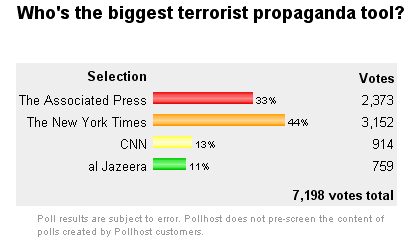
Flopping Aces has done a superb investigation to show how Islamists are using the web to fake news items. Don't miss his Getting the News from the Enemy posts regarding Capt. Jamil Hussein, the burning of mosques, and six torched Sunnis. Michelle Malkin has also been involved in the disentangling of the plot. Here are the results of her poll.

Private Marriage for Elderly?

I once wrote a post on Religious vs. Civil Marriage that included a story of an elderly widower who was living with a widow without being married because they would lose their benefits if they married. The question of whether a secret marriage is permitted in such cases is addressed by Fr. Brian T. Mullady, O.P. in the November issue of Homiletic and Pastoral Review, a reputable priests' magazine now published by Ignatius Press and edited by Fr. Kenneth Baker, S.J.

In the column Questions Answered, a priest asks Fr. Mullady about a couple who asked if they could be married privately in the Church, but not bother about getting a marriage license from the State. The questioning priest said he told the couple that he could not marry them under those circumstances because marriage is a public event, not private.

Fr. Mullady concurs with the priest in his decision not to privately marry the couple so that they can avoid the establishment of civil effects. He describes several problems with a private (or almost secret) marriage. A summary of Fr. Mullady's comments follow.

Marriage is acknowledged by the Church to be an act with both religious and civil consequences, and a secret marriage can occur only in very rare instances when civil law is contrary to the natural law. A private marriage that is not registered with the State does not recognize the institution of marriage as the bulwark of the civil order and ignores the State's duty to protect and encourage stable marriages. Canon Law recognizes the normal jurisdiction of the State as contributing to the civil order and marriage. If the Church does not recognize the State's jurisdiction, the State can doubt whether the Church really wishes to give to Caesar the things which are his.

Furthermore, a private marriage undermines public perception of marriage and gives bad example when couples are seen to live together. Fr. Mullady concludes that "pastors [must] respect the requirements of the public registration of marriages by the civil law."

Remember that Fr. Mullady's answers were published in the same priests' magazine as the prior article by David R. Carlin that discussed whether religious marriages should be separated from civil marriages.

Nov 28, 2006

Rehistory--Why Not?

The proposed story of The Sugar Ant Particle introduces the idea of Rehistory. This post addresses why cutting and revising the string of time in a sci-fi story is not an acceptable idea.

Genesis proclaims God created man in His own image—man has been given free will. Man’s free will means he is allowed to write history in his lifetime by his good, bad, and morally indifferent choices. ‘Forward history’ is written by man making choices (e.g., man selects a spouse, gets a job, is virtuous, commits sin). Man assists in writing history in time, a dimension that is one of God’s creations.

'Forward history' is governed by cause and effect (God may intervene through a miracle; then He is the direct cause). Man lives in the sequential timeframe of ‘before, now, and after.’ For example, man did not eat in the past day, man now eats to satisfy his hunger, and man will be satiated for a time. Of course, hunger is not deterministic and a man can choose not to eat, and thus effect a different timeline of events.

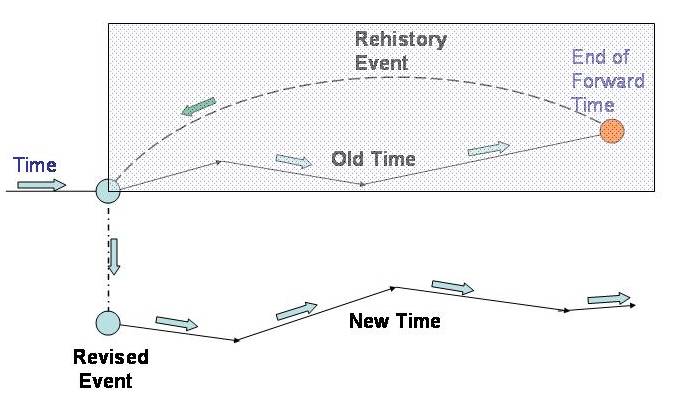
If man can affect ‘forward history,’ can man also affect ‘backward history,’ such as by revising a physical environment in the past? Let's assume the answer is 'yes' so that we can see potential dead ends--irrational or erroneous conclusions. The figure below shows forward and backward histories as two time paths.

Figure 1. Rehistory Events and Paths

The top part of Figure 1 contains the original events that end when a rehistory event is generated. At this point, the original events (within the blue box) are deleted. All environments and people and activities no longer exist after the timepoint when rehistory begins to take effect. Time restarts with no memory of the original events—which never happened!

It isn’t as if events in the top blue box are changed. Both virtuous and sinful actions never occurred. Christ’s birth and redemptive act never occurred. Yet, as the author of time, God could still insert the Incarnation of His Son. This instance shows that rehistory means that God would be at the service of man who would control time and history, to which God must adjust. This is obviously a grievously defective conclusion.

The principle of cause and effect also is affected because rehistory is a cause that is out of order—it exists in the future rather than the past. Common understanding is that a cause must precede an effect, so a potential contradiction appears.

A former Jesuit priest once described God as holding the string of time in his hands. The string of history has a beginning and an end. God is outside of time and so he can ‘touch’ the string of time at any time and any point in the universe. He knows the beginning and he knows the end. That is why God is “I Am.” Is man prohibited from ‘touching’ the string of time? If man attempts to touch the string, does he also claim to be “I Am”?

Can man influence the string? Yes, he controls history by his actions. But can man cut the string, discard sections, and manufacture a new string? Is time able to be manipulated as man manipulates objects in space? If man controls the string of time, does that make man a competitor to God? Is time a dimension that is necessarily the province of God only? Is rehistory, because of violating cause and effect, a contradiction and a lie?

Is the Rehistory story of The Sugar Ant Particle potentially very interesting? Perhaps, but unless the above discussion precedes the story to show the philosophical difficulties, the story should probably not be written.

The Sugar Ant Particle

Some months ago I wrote an 8-part summary of “The Great Catholic Retreat.”
In this potential sci-fi story, a priest of the year 2100 writes a history book describing historical events of the Catholic Church in the 20th and 21st centuries. The Church history shows that the severe losses experienced in the Catholic Church during the latter half of the 20th century led to the inability of Christian civilization to oppose the advance of Islam. I concluded the story couldn't stand on its own, but would need to be embedded in a larger story.

In the proposed larger story, a particle accelerator is used in 2018 to attempt to answer two scientific questions on (1) the missing spin of the quarks, and (2) the absence of free quarks. A young scientist notes during the pre-collision process that tiny sugar ants have gotten into the 3-story tall particle detector system.

He watches a line of sugar ants move slowly across the detector surface when one ant suddenly moves sideways as if moved by a unseen force. A minute or two later, a second and a third ant are also observed to move sideways, in the same direction and distance as the first ant.

The physicist is working under a countdown scenario and is asked if his detectors are ready to proceed with the experiment. The physicist quickly uses a compressed air jet to clean the detector surfaces and the particle collision experiment begins. Three collisions occur at approximate one minute intervals. The expected spin is too low and represents only 30 percent of the expected energy/mass.

The physicist hypothesizes the missing particle spin could be found about ten minutes BEFORE the experiment. He concludes the missing spin is associated with a new particle that appears before the experiment is conducted, is very large, and decays within milliseconds. After verification experiments with salt crystals (instead of ants), the “before” particle is named the “Sugar Ant Particle."

The young physicist and his team are awarded the Nobel prize for physics in 2028. Further tests and development of a new mathematical model and corroborative experiments show that the emitted location and particle force can be controlled.

The priest-author of the “Great Catholic Retreat” argues in 2100 to an academic audience that if Anatole Bugnini had not been in charge of the NO Mass following Vatican II, that the Church would have been spared a significant decline. Moreover, avoiding a decline would have enabled the Church to have countered the great expansion of Islam in the 21st century.

Rehistory is based on use of the Sugar Ant particle to change a physical phenomenon or environment in the past. The goal of rehistory is to change a prior event (1) with minimum effort, (2) to obtain maximum desired result, and (3) to limit any unwanted effects.

In chaos theory, changing something big with something small is called the lever effect or the Butterfly effect, where a butterfly wing flapping in a Chinese field can create air currents that grow and produce storms in the U.S. Once a butterfly flaps its wing, Arturian-Markovian statistics can be used to project successive happenings.

The priest-historian agrees to serve as a senior consultant for a rehistory event to prevent the Great Catholic Retreat of the late 20th century. Based on the sugar ant particle phenomenon, he presses forward to use rehistory to reveal Bugnini as a Mason at a much earlier date--before he damages the old Latin Mass.

Almost ten years go into the planning for the rehistory event, because the effort requires a complex Rehistory Impact Study (RIS, similar to an Environmental Impact Study). The rules include:

1. No injury can be done to persons (as simulated in the RIS)
2. Simulations must ‘prove’ rehistory will affect only target situation
3. A preferred way of dealing with miscreants is to ‘promote’ them out of the way
4. Simulation must show easy reversibility at a later time
5. Form of government cannot be changed
6. Form of religion cannot be changed

The ten-year planning effort is intense, but is plagued with unexpected difficulties as the project leader deals with:
1. Feasibility analysis
2. Simulations
3. Iterations
4. Final Plan

The Senior project engineer for rehistory is Shekel (actually Sheik Al, a secret Muslim) whose own idea of rehistory is to revise a small event before 1492 and so prevent Isabella and Ferdinand from winning the last battle of the Christians against the Moors. Shekel hides his intent by arguing that the best rehistory event would be to change something in an earlier time period so that the western hemisphere would have a long history of Catholic militancy to counter Islam.


You can imagine the rest of the story....

Now for why the story won't be written, please see the next post.

The Universal Indult

While Rorate Coeli remains the primary source of information, a new Catholic forum, Universal Indult, also shares news and discussions on the 'freeing' of the old Latin Mass. The most comprehensive post, The Road to Restoration, is written by Msgr. Ignacio Barreiro and is reprinted from the November 2006 issue of the Latin Mass Society's publication, Mass of Ages. Msgr. Barreiro summarizes events of the last year to show the direction that Pope Benedict XVI is taking.

Nov 27, 2006

Why the Pope is in Turkey

One of my children and Mrs. M from the nursing home both have asked me why the Pope is traveling to Turkey, considering the physical danger of his travels. I've already described one possible reason in a previous post.

The official reasons for the Papal visit are described in the Vatican communication on the Significance of Benedict XVI's Trip to Turkey: (1) a pastoral journey; (2) an ecumenical journey; and (3) a journey under the banner of interreligious dialogue. The basis for interreligious dialogue with Moslems is stated to be the Declaration Nostra Aetate (In Our Time) issued by the second Vatican Council. Here is what Nostra Aetate says about followers of Islam:

The Church regards with esteem also the Moslems. They adore the one God, living and subsisting in Himself; merciful and all- powerful, the Creator of heaven and earth,(5) who has spoken to men; they take pains to submit wholeheartedly to even His inscrutable decrees, just as Abraham, with whom the faith of Islam takes pleasure in linking itself, submitted to God. Though they do not acknowledge Jesus as God, they revere Him as a prophet. They also honor Mary, His virgin Mother; at times they even call on her with devotion. In addition, they await the day of judgment when God will render their deserts to all those who have been raised up from the dead. Finally, they value the moral life and worship God especially through prayer, almsgiving and fasting.

Since in the course of centuries not a few quarrels and hostilities have arisen between Christians and Moslems, this sacred synod urges all to forget the past and to work sincerely for mutual understanding and to preserve as well as to promote together for the benefit of all mankind social justice and moral welfare, as well as peace and freedom.

Nostra Aetate is not one of my favorite documents, although I agree that the Pope and Moslems should "work sincerely for mutual understanding." It is easy for Westerners to learn about Islam through the Web or the Koran--just google 'Islam' or go to a bookstore or library. Unfortunately, computers, libraries, and bookstores with Bibles or Christian writings are not freely available to Moslems in Arab lands. Reciprocity of information sharing simply doesn't exist and is not likely to happen.

"Who Killed Christ?" and Benedict XVI

A TV presentation within the past couple of years asked the question, "Who Killed Christ?" They showed the evidence against Judas, Pontius Pilate, Herod, Roman soldiers, and Caiphas and the ancient Jews, all of whom were involved in the death of Christ. The final answer of The Discovery Channel was that Jesus willed and was responsible for His own death.

Jesus is the High Priest who laid down His life to make the pleasing sacrifice to God the Father. While Jesus had the authority and power to prevent His passion, He voluntarily suffered death to make sacrifice for our sins and save all of us from hell. Truthfully, all sinners are responsible for the killing of Jesus Christ. That answer is supported by the New Testament, especially John 3:16-17, and John 10:17-18.
For God so loved the world, as to give his only begotten Son; that whosoever believeth in Him, may not perish, but may have life everlasting. For God sent not His Son into the world, to judge the world, but that the world may be saved by Him.

Therefore doth the Father love Me: because I lay down my life, that I may take it again. No man taketh it away from Me: but I lay it down of myself, and I have power to lay it down: and I have power to take it up again. This commandment have I received of my Father.
I've begun to wonder if Benedict XVI may have decided to expose himself to a potential assassination by Muslims to voluntarily imitate Christ's redemptive sacrifice. The Pope's willingness to sacrifice his life for peace in the face of intense hatred would likely make clear to some Muslims and a lot of non-Muslims the awesome charity of our religion in contrast to the evil nature of Islamism.

If such a terrible act of violence occurs, it would make Christians clearly come to grips with marauding Islamism. Moreover, a Pope martyr/saint has not been seen for many, many centuries and would fertilize the seedbed of the Church with his blood. Benedict XVI may believe this is necessary.

Nov 26, 2006

Little Changes in History

A lot of changes have occurred in my lifetime of almost 70 years. The big changes in religion, politics and law, and 'lifestyles' have been noted many times over. But it's the little undocumented changes that are also very important and show how much our society has changed (declined?) in the past 50 to 70 years.

MUSIC--When I was in grade school, the music on the noon radio was live cowboy music, mostly played with fiddles, a bass, and a horizontal steel guitar. The music was quite popular at the time. My favorite radio program was The Lone Ranger with its William Tell Overture as the accompanying music. My favorite movie star was the singing cowboy, Roy Rogers. I really liked to listen to the Sons of the Pioneers. I loved the colorful cartoons, especially the ones where the little yellow Tweety Bird says, "I Tawt I Taw a Puddy-Tat!"

While in college in the late 50's and early 60's, I purchased a small blue-green radio for about $30 earned from a summer job. Virtually all of the FM stations I received on that radio played exclusively classical or semi-classical music and with very few advertisements. Almost all the girls in my hall loved classical music, although they also crowded around the TV to hear Perry Como sing. [Over the years, the number of FM stations in KC has increased dramatically, but not one now plays classical or semi-classical music.]

BABIES--One of my freshman classmates in college was a very good student. I wondered why she did not return for her sophomore year and was told by another girl she had gotten married over the summer because of becoming pregnant. This was typical of the situation at that time.

Until my third or fourth child, changing a diaper meant changing a cloth diaper. A really dirty diaper was one that you washed out in the toilet stool before placing it in a covered bucket for later washing in a ringer-roller washing machine.

TOYS--The toys that my children played with were much more interesting and fun than toys of today. One particular toy for small children that was taken off the market, presumably due to safety reasons, was a wood block with an entry hole in the top on one side and an exit hole on the other side near the bottom. Dowels were placed in the entry hole and the child used a hammer to pound the round pieces of wood through the interior wood channel so they came out the exit hole.

SCHOOLS AND NUNS--When I attended early Catholic grade school, the tuition was $1 per month. Tuition for my first year of Catholic high school was $40 per year and my Dad thought that was high. In both cases, the nuns worked hard and received little monetary pay. By about 1950, one young nun had ~60 children in a first or second-grade class--and she kept order, too!

I remember my aunt driving the teaching nuns to the grocery store and other places they had to go on a weekly basis. The sisters never had a car and relied on parishioners to furnish them transportation. Parishioners also contributed food from their gardens to the nuns. Doctors who treated the nuns did so on a pro bono basis.

The nuns sold candy to the students every Friday afternoon and a nice sized candy bar cost 5 cents. Students were prohibited from buying more than two pieces of candy, if I remember. The selling of candy was a money raising effort for the school.

Once a month, mothers fixed breakfast for the students after the First Friday Mass because everyone had to fast from all food and water from midnight on. To make sure students avoided drinking water before First Friday Mass, the nuns covered the school drinking fountains with paper bags.

CLOTHES--Everyone dressed up if they went to church or to town for shopping. Women and men wore hats or the women wore scarves. Only leather shoes were believed suitable for dressing up. The first tennis shoes were said to be unhealthy for children's feet. X-ray machines in a few shoe stores were used to show how well shoes fit on a foot, although they were discontinued by the time WWII ended.

KITCHENS--There was no plastic wrap or aluminum foil when I was young. The kitchen was a plastic-less world. Wax paper was used to cover food. Milk was not homogenized and the cream came to the top of the glass bottles The cream could be poured off to put in coffee or make whipping cream or butter.

When oleomargarine was introduced, the dairy industry forced the margarine producers to make it white. Only the buyer could color the margarine by mixing in a packet of yellow dye. Eventually consumers complained to state legislators and the law was changed so that yellow margarine could be sold.

A primary activity in the summer kitchen was canning. I remember helping my mother can 80+ jars of strawberry preserves one year. She also canned lots of tomato juice and some pears.

Two Church Letters on Homosexuality

Cardinal Sean O'Malley has a blog where his letter on homosexuality issued November 23 was published. Here are portions from his letter.
The Church’s efforts to defend the institution of marriage has been interpreted by some as an indication of the Church’s hostility toward homosexual persons....

Right from the beginning of this controversy [sic] I have called on all Catholics to rally behind the cause of marriage....

The Church’s position is not based on an animus against people with a homosexual orientation. Each and every member of the Church is called to holiness regardless of their sexual orientation. The Church has often warned against defining people by their sexual orientation in a way that diminishes their humanity....

We do not want Catholics who have a homosexual orientation to feel unwelcomed in the Catholic Church. We remind them that they are bound to us by their baptism and are called to live a life of holiness. Many homosexual persons in our Church lead holy lives and make an outstanding contribution to the life of the Church by their service, generosity and the sharing of their spiritual gifts....

We must strive to eradicate prejudices against people with a homosexual orientation. At the same time the Church must minister to all people by challenging them to obey God’s commands, the roadmap for a meaningful human life that allows us to draw near to God and to one another.
The full communication by Cardinal O'Malley is published here, and you will notice a glaring omission--not one word is said about homosexual priests in the Catholic Church in Boston.

Contrast Cardinal O'Malley's letter with one published by Pope Pius V on August 30, 1568 "Against any cleric whosoever, secular or regular, who are guilty of a heinous crime."
A ghastly crime, by which the joined (papal) states were polluted enflamed by God’s fearful judgment, flares up our bitter sorrow, and gravely moves our soul so that we lend now our attentions to repress it as much as possible.

1. It was properly denoted by the Lateran Council, that whatsoever Cleric will have been discovered to suffer from that incontinence which is against nature, on account of which the wrath of God falls upon the sons of disobedience (cf. Vulg. Eph. 5,6), is to be ejected from the ranks of the clergy and be reduced to do penance in a monastery.

2. But lest the contagion of such a scourge, from the hope of impunity which is the greatest lure of sinning, more confidently grows in power, We determine that clerics guilty of this execrable crime are to be quite gravely punished, so that whoever does not abhor the ruination of the soul, the avenging secular sword of civil laws will certainly deter.

3. And thus because We have made a decree in this matter at the beginning of Our Pontificate, now in a fuller and stronger way intending it to be followed strictly, every and all priests, whoever they are, and other secular clerics, and regular clerics of any grade and dignity, busy at such a detestable monstrosity, We deprive of every clerical privilege, every office, dignity, and ecclesiastical benefice by authority of the present legal instrument. So it is enacted that once they are degraded by the Ecclesiastical Judge, they be handed over immediately to the secular arm, which will exact upon them the same (death) penalty, which is ascertained to have been constituted by legitimate sanctions against laymen who have slid down into this ruin. Nothing to the contrary withstanding, etc.

Did you notice the differences between of the two letters?

Nov 24, 2006

The King of the Internet

History always repeats itself and so we should expect new kings to arise in the future. A long time ago, I heard that when society begins to topple from its sins, a man on a white horse will appear. The new king will be an incarnation of Mao, Mohammed, or Charlemagne--take your choice.

How will the king take power and who will be the king? The first question is dependent on a third question--will the web survive the toppling of society? My guess is the web won't be destroyed because it is crucial to the success of all parties to the battles. Both devils and Saints want to touch others to condemn or save souls. Rather, I believe a peacetime web may be controlled rather than destroyed, with general consortiums of web villages achieving supremacy to control most of the other web villages.

Web villages bind people together because of similar religions, backgrounds, and political and social views. A village can cross bedrooms and oceans to provide homes for people of like mind. Village citizens are characterized by:
  1. Little or no reading of local newspapers or watching of live TV
  2. Frequent connection with other villagers through the web, email, and cell phone
  3. Exposure to immense amounts of information that support the views of a particular web village
  4. Sharing common experiences so that personal allegiance to the village matures
  5. Activation of militants on projects designed to reach specific goals.
R.J. Stove writes in the Remnant News, "Should We Blog." Frankly, even though the world of the Internet has many temptations to sin, it is the framework that must be used if new Charlemagnes can come to the forefront of history. "Should We Work?" may be an alternative title for Stove's article, and if we are not yet dead, the answer has to be positive.

In the past, a one-to-many news system has meant the distribution of information from a few central locations to many people through the TV, magazines, and newspapers. In contrast, the internet is a many-to-many world, where everyone can be considered his own program director or editor. Moreover, new voices both listen and talk with their peers to form alliances and even generate more information, usually on an ad hoc basis to pursue a common goal.

The Internet democracy now consists of:
  • Almost 60 million blogs
  • Almost 130 million MySpace pages
  • Over 70 million YouTube videos watched each day.
Yet most information is acknowledged to be wrong or worthless, and some even poses considerable danger. For example, the web can show you how to kill people (both en masse and secretly) and also how to commit suicide. Additionally, the web is full of important facts mixed with biased commentary--making all information not equal.

Special Internet tools are needed to allow people to use the web to rebuild Christian civilization. Internet filters are of much greater importance to the building of a Christian presence on the internet than is commonly discussed. Directories of Christian information and Catholic blogs are also very important. The establishment and growth of Christian web villages (e.g., blogrolls, leagues) are most critical, because the web shows a polluted people that must be converted using some of the same techniques that were used to proselytize them for evil.

Some of the techniques will involve "Hive" software (think bees that make honey and swarm to protect the hive) to enable the rapid working together of many people in a village. I suspect that even an iPod may be a necessary 'gun' of militant Catholics in the future, mounted on a belt, worn as a watch, or held in a pocket to promote and defend their faith whenever necessary. [If the current pace of computer storage capacity continues, by 2015, an iPod is estimated to hold everything ever printed or broadcast in the history of the world, in any language or medium. ] "Hive" software will be needed to use this information effectively and efficiently, as required by specific militant Christians who have volunteered to serve in special team roles.

Even more, I believe "Hive" software is needed to use the democracy of the Internet to tap the intelligence of the crowd. No, I'm not talking about deciding on religious doctrine, but how best to employ group intelligence that has been demonstrated by many experiments to better judge questions of fact than individual persons. As individuals contribute to such a process, they also buy into subsequent actions. "Hive" programs will allow contributions of proposed procedures/tasks to accomplish a specific goal, then to achieve agreement on the goal, and then to manage subsequent activities that must be performed. A superhive web environment will be needed to deal with many like-minded villages in different environments.

An illustration of where this tool could have been used is the recent Missouri Stem Cell Initiative. Opposition to the cloning amendment was not well developed on the web, partly because relatively few Christian bloggers or MySpacers were identified in Missouri and most worked not at all or were alone rather than in concert with each other. With the right tools, 200 active bloggers could have motivated more interest and activities on a daily basis. Moreover, 200 people would have contributed their own ideas on what efforts would achieve the most success. Many more than two hundred Christian blogs in Missouri is reasonable within the near future because of very high growth rates in web connectivity, knowledge, and blogging.

Is this really possible? Yes, it is happening in Estonia which seems to have a lot of internet-savvy citizens. The government of Estonia has set up a website called 'Today I Decide'. Some of the policies and actions suggested by citizens have now been implemented by the government. Others are generating a lot of heat in political discussions.

Are there bad things that will likely happen? Yes, certain persons may become renegades to challenge the village raison d’être. Other maverick villagers may try to expand their own universe of beliefs or achieve a personal agenda. In both cases, identified troublemakers should be removed from the village through voting or by a village leader. Web tools such as "Hive" software should insure non-friendly input is restricted in making village decisions.

Christian villages on the web will motivate Catholics and Protestants to take the fight to the enemy and rebuild the Church. While Christian unity in the one, true Catholic Church remains a far-away dream, a subset of that unity is now possible on issues related to life, secularism, and Islam. Villages are not local churches and so should encourage membership to any friend of Christianity.

Can good Catholic Internet villages restore the Church and eventually the world? I'm betting it has already started and needs more prayer, intelligence, development, and action. Eventually, Jesus Christ must be placed in his proper place as King of the Internet.

Nov 23, 2006

The New Totalitarianism

I tried to google a book of about 30 years ago entitled "The New Totalitarianism." I remember it was a very powerful book that discussed the new sexual freedom. Guess what? There are more than one new tyrant staring back at me.

1. Islamism
2. Thought police for "hate" crimes
3. A "Brave New World" which is numbed by frequent, meaningless sex that keeps the populace seduced and willing to accept government tyranny

The book published in the 70's addressed No. 3, pointing out the price Scandanavian countries paid for sexual freedom--government control of most aspects of personal lives. Thirty years later, here are the results for liberal Sweden as reported by the American Family Association:

• There is more crime in Sweden than in New York City, though they are comparable in population.

• Drug abuse is rampant, with the number of deaths from overdoses having doubled in the past 10 years.

• Sweden has one of the highest incidences of rape in the world.

• Burglaries are so numerous that many citizens have stopped reporting them, because the police are overloaded and cannot undertake to investigate them all anyway.

• Attacks on money transports (like highway robbery) are so frequent that the transporters are threatening to quit, thereby effectively closing ATM’s all over the country.

• Violent outdoor muggings are becoming routine, having increased 15% last year alone.

• In Stockholm, the police recently admitted having lied when they claimed to have neutralized some 130 of the city’s most prominent gangsters; in reality, their sting operation was a bust.

• Swedish courts are plagued with perjurious police officers who routinely lie to support fellow cops in trouble.

Nov 22, 2006

Thanksgiving Day

When I was young, our family and our aunts, uncles, and cousins on Mother's side would get together for holiday dinners, usually three times a year. Just before my Father's death, he turned to me and said, "Don't ever forget how important family gatherings are." He repeated that statement perhaps twice to make sure I wouldn't forget it and I haven't.

Tomorrow on Thanksgiving we will gather at a son's and his family's house. The family hosting the dinner usually supplies a meat and perhaps two or three other items and drinks, and everyone else brings something to complete the dinner. One person will fix a dessert, another will make a fruit salad, a third will bring a vegetable dish, etc. My job is to bring smoked hams and fruit pies.

The cousins will have a wonderful time, as always. They will play together and talk together and totally ignore the adults. The older girls will likely discuss their storywriting ideas. The little boys will race up and down the stairs and then scout out hidden places in the house to share secrets. The little girls will talk and probably play with the babies. The older boys will likely go outside because Kansas City is forecast to have one of the warmest Thanksgiving days on record.

Some of the dads will quietly consider whether they should ask their wives if they can leave after dinner for a couple of hours to race over grassy knolls hitting little white balls. Mothers will talk about children, and will find out how the newest mother-to-be is feeling these days. Most importantly, before we sit down to eat, we will all pray and thank our Father in heaven for his many, many blessings to our family.

Nov 20, 2006

New Mega Catholic Church

Texas likes to be bigger than anyone else. Here's a news announcement of the dedication of a new 33,000 sq ft Catholic megachurch in Round Rock, TX. Interestingly, it's not like the structures of Protestant megachurches.

St. Williams has a traditional look, with a painted ceiling and beautiful altar. The stained glass windows are more than 100 years old.

"They were made in Germany and they were in an orphanage in Philadelphia. And the orphanage closed and basically, these windows were lost in storage. And somebody discovered them and we said we want them put our name on them," [Fr. Joel] McNeil said.

McNeil has headed the church since 1999. He said they expect to expand the building to accommodate 1,000 more people over the next 10 years.

Nov 18, 2006

Dishwashing Lessons

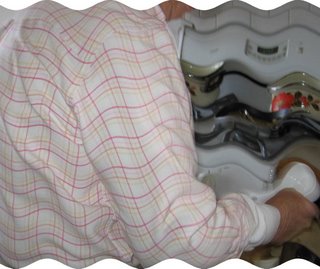
My husband and I just finished washing and drying dishes together. This teamwork reminded me of when my siblings and I shared dishwashing and drying duties back in the 50's. That was a great lesson in learning to work together with contesting peers!

My younger sister and I were usually at odds over who would dry and who would wash. Mother would have to choose, and she quickly figured out that it was best to make assignments for an entire week. Even then we had arguments over whose turn it was to wash.

The person who washed the dishes had the worst job. He had to start first, scour out grimy pots and pans, and clean the cabinet top and sink at the end. The person who dried dishes would usually have the upper hand. She could come late (making the dishwasher angry because the rinse sink was now overflowing with dishes), or throw dirty spoons back into the wash water--with a "You forgot to clean this!"

In those days, Mother cooked daily meals from scratch using non-Teflon pans. The only thing that made the skillet easier to clean was the gravy which during cooking had released the stuck browned meat and flour. An electric clock hung above the sinks of wash water and rinse water. Looking at the clock's second hand, we held regular contests on who could hold their breath the longest.

The issue that led to the most fights was who got to sing. Naturally we did not like to sing together. We finally agreed that whoever started singing first could continue without interruption. Yes, dishwashing days are over in most families. A pity, because I can't think of a better way to practice getting along with your neighbors.

Praying with the Horse.... (in mind)

A very long time ago, a good Catholic nun told me this story in grade school. The nun first explained that we must concentrate on the meaning of the prayers we say, and not be distracted. She admitted it would be difficult. To show the difficulty, she told this story.

A woodsman was cutting trees in the forest when a stranger on a horse appeared. Dismounting, he asked the woodsman for a drink for himself and his fine horse. The woodsman took the well-dressed stranger to a nearby well and the two men sat down and talked as the horse finished drinking from the water bucket and began grazing.

In those days, it wasn't too long before the mens' conversation changed from a discussion of the weather, crops, and livestock to a discussion of religion. Soon the two men began to tell how they prayed while working. The stranger said he could not retire to a room and pray quietly, so he sang his prayers as he rode. The woodsman explained he prayed the rosary while meditating on the mysteries while he worked to chop down and debark trees.

The stranger sadly remarked he had problems in concentrating on his prayers, even though singing them helped The woodsman answered that he had learned to pray attentively when very young and could keep his attention focused on his prayers. The stranger vigorously objected that total attention was impossible but the woodsman vigorously disagreed.

Soon the argument flared into a bet. The stranger said he was so sure that it was not possible to totally focus on a prayer to the exclusion of everything else, that he would bet his horse that the woodsman could not say the Our Father without losing concentration. The woodsman accepted the bet and began to pray:
Our Father, who art in heaven,
Hallowed be Thy name.
Thy kingdom come,
They will be done,
On earth as it is in heaven.

Give us this day our daily bread,
... By the way, does the saddle come with the horse?
The nun proceeded to explain that if we lose attention during a prayer that we should not go back and repeat it, but should ask God to forgive us and continue with succeeding prayers. I've found that to be a good recommendation.

Local Archbishop in Boston Newspaper

The Boston Globe reports that Archbishop Joseph F. Naumann of Kansas City, Kansas made an important statement at the Catholic Bishops' Meeting in Baltimore this past week. I think the Archbishop deserves a pat on the back and our continuing prayers.
"As teachers, we have an obligation to teach, not just about the things people agree with, but the difficult things as well. . . . We have a responsibility to try and help our people understand things that, because of the culture being hostile, aren't easily accessible to them."

Glorified Body on the Road to Emmaus

Catharina Senensis of The Cornell Society for a Good Time has initiated a great discussion on the sex of the resurrected body. A couple of persons have noted that Catharina has proposed "a fine question... one fit for Thomas' Summa." I'd like to add a few points for further consideration.

One of the stories in the Gospels that I've pondered a lot over the years is the story of Jesus' appearance on the road to Emmaus, as told in Luke 24:13-32. Two of Jesus' disciples were walking away from Jerusalem the day after His Resurrection from the dead. The Bible says Jesus Himself drew near and walked with them. The disciples talked with Him as a stranger about the happenings in Jerusalem and Scripture, apparently for some time, and finally asked Him to abide with them for the evening. They ate together, but did not recognize Jesus until the breaking of the bread.

How was it that they did not recognize Jesus? I speculate that Jesus, in his glorified body after His Resurrection from the dead, had the appearance of a young man, even as the boy He was when His Mother, Mary, and His foster-father, St. Joseph, found Him in the Temple.

Personally, I like the idea of having a young glorified body when we are free of sexual concerns, yet we still retain our identity as male and female. Was Jesus implying this when He said that we must be as children to enter heaven?

Nov 17, 2006

New Family Planning Doctor

Carol McKinley says this appointment is HUGE! I tend to agree with her.

Bishop Bruskewitz at the Bishops' Conference

EWTN's weekly news, The World Over, is hosted by Raymond Arroyo. This evening Arroyo focused on proceedings of the U.S. Bishops' Conference that is meeting this week in Baltimore. You really need to see the reruns of tonight's program that will be replayed early Saturday morning, November 18, 1 am EST and at several other times in the next couple of days.

Raymond Arroyo shows various clips of U.S. Bishops at the Baltimore meeting, including Bishop Bruskewitz quoting from Pope Benedict who has said a Bishops' Conference is not worth its weight in butterfly wings! (no, he really didn't say quite that--but you get the message). Even if you don't like some of EWTN programming--you should listen to this week's news of the Bishops' Conference as reported by Raymond Arroyo.