Aug 19, 2006

Mateo Ricci--Jesuit Inculturationist

I had thought that Fr. Teilhard de Chardin S.J. had pretty much passed into oblivion, but here comes Fr. Peter Hans Kolvenbach. father general of the Jesuits, who compares Chardin to Fr. Mateo Ricci, who traveled to China and became the court mathematician in Peking. I find the comparison interesting because both of the named Jesuits compromised and adapted their Catholic faith to the environment of the time. Both inculturationists were disciplined by the Church.

Ricci was a Jesuit missioniary of the late 16th and early 17th centuries who spent the last 27 years of his life living and dressing as a Chinese scholar, and is considered a leading inculturationist who incorporated Chinese religious beliefs into Catholic liturgy. Because the practice of ancestor worship was so deepseated in Chinese society, Ricci allowed the new Chinese Catholics to continue with the ceremonies that honored the dead and Confucius. He also used certain Chinese terms to designate God that were later declared incorrect by Popes.

After much controversy and the passionate defense of Ricci by the Jesuits, the accomodations of Fr. Ricci to Chinese paganism were condemned in 1742 by Pope Benedict XIV in the Bull "Ex quo singulari." The Bull required the missionaries to take an oath that such abuses would not be tolerated in the future. Ceremonies in honour of Confucius or dead ancestors and relatives were said to be tainted with superstition to such a degree that they could not be purified.

In July 1983, the Red Chinese published a laudatory piece on Fr. Mateo Ricci. Seizing on this possible opening of Chinese Communism to Christianity, an International Convention to honor Mateo Ricci was held in in Rome during October 2001. The conference was sponsored by the Pontifical Gregorian University and the Italo-Chinese Institute. In a message to participants, Pope John Paul II called for the normalization of diplomatic relations with Red China. He also apologized to the Chinese for errors and actions that the Church in China had committed in the past. Enuff said!

Saintly Service in the Closet

I've been privileged to know a few people who have given saintly service to the Church, yet who will remain mostly unknown in closets of the past. One is a lady who has been dead for over ten years. Her life seemed to be divided into four parts--a very exciting international life before marriage; a happy life with a nice house, couple of kids, and golfing at the country club; a challenging life with a child that brought her into pro-life work, and a more difficult yet serene life when she was mostly homebound because of her health.

My friend was a great letter writer. Many times I would read her commentaries in public and church newspapers and magazines. She was distinctive in that her submittals were often the shortest letters published, yet they usually said the most.

It was her private letters that gave the most saintly service to the Church. She wrote many, many letters of encouragement to good priests who were tempted to leave the priesthood. The priests knew they were being robbed of their dignity and identity in Catholic churches during the 70's, 80's, and early 90's. They felt emasculated by limitations on their authority, certain women given responsibility for priestly duties, and mandatory retreats that left them dry of spiritual life.

From the little my friend would tell me, I knew she corresponded with a goodly number of these priests with her regular letters. Without her encouragement, I believe many good priests would have simply walked away from the horrible messes following Vatican II. Yet these good priests stayed to give the sacraments to faithful Catholics, even though sometimes they were severely limited in what they could and should do.

Esther, May God bless and reward you for your letters of encouragement to priests.

Aug 18, 2006

Large Houses and Lost Sippy Cups


All of our children now have larger houses than we do. Do I envy them? Oh, no! Both my husband and I think a large house is more of a rock around the neck forcing us to spend more money and time than either of us want to give. In addition, a large house requires a lot more effort to clean. I find my own housecleaning a real chore, and I live with the continuing promise of cleaning tomorrow, because I have more important things to do today.

I've just finished babysitting for one of our youngest grandchildren while her parents camped at a nearby lake with the older children. The toddler was good and I had extra time, even to make some brownies. My daughter wants me not to work excessively when I come, so she had gotten her children to help her clean the large house, and it appeared cleaner than mine.

Why is it that I always look for dirt to clean when I go to my children's houses to babysit? It is clearly an unnatural vice, because I always avoid looking at the dirt in my own house. Is it a problem with my eyesight? Or with my focus? Really, I just want to help my children because their large houses often have a lot of variety in cleaning opportunities. And the reward is greater because I usually get hugs and thank you's when my work is done.

The first thing I did after I arrived was to try to find a clean sippy cup so the toddler would not spill her milk. A sippy cup is made of three parts--the cup, the valve, and the lid through which the baby sucks the drink. The sippy cup drawer was full of misaligned parts, and only one lid fit with any of the clean cups, although a couple of correct valves were available. I decided to find some of the missing parts that I knew must be hidden around the large house.

Unless one counts the wastebasket, the most likely place to find missing toys (my grandchildren's greatest sorrow in life) is under things--under the table, under the sofa, under the bed, etc. From experience, I know the most promising place to look for baby bottles and sippy cups is under beds. As I went from bed to bed, I picked up the skirt and peered into the semi-darkness. I immediately found junk, otherwise known as my grandchildren's treasures. Moreover I found dirt--the most evil substance in the universe. [Sorry, League of Evil Traditionalists, you don't come close to matching the REAL thing.]

Success! I found three pieces of sippy cups under the seven beds. I also found an old baby bottle (which the toddler no longer uses) and a complete sippy cup assembly (yes, the milk was curdled into the solid part and the liquid part).

I'm sure my daughter thought her house looked clean enough that I wouldn't look and I wouldn't clean. Old grannies, at least this one, just can't help themselves.

Aug 15, 2006

We Are Hated, Not Evil

"Blessed shall you be when men shall hate you, and when they shall separate you and shall reproach you and cast out your name as evil, for the Son of man's sake." Luke 6:22

Just to get this off my chest...

Aug 14, 2006

Excessive Blogging--A Heresy in the Home

My previous post focused on the mostly sedentary life of a blogger--perhaps leading to a few of us unwilling to show a photo of a fat slob in front of a computer screen. Excessive blogging is actually a heresy in the home that pretends we are only a distant intellectual being and avoids our physical being. The internet doesn't permit a real smile (only an artificial smilie) or hand shaking, and mostly avoids the hearing of our voices.

The danger is especially great if we blog too much with children at home. We may believe that someday our blogs will penetrate to our young children. Yet children are trained in truth by mostly their overhearing external discussions--preferably in person where the child can hear both sides of the conversation.

Our legacy will not be our blogs but our children. I've assigned a scoring system that ranks the different kinds of discussions we have with each other and that can influence our children for good:
  • Old times -- parent to friend in presence of child (2 pts)
  • Recent past--parent to friend on phone (1 pt)
  • Now--parent to others by email and blog (0 pts)
The best training is when a child can hear both sides of an adult conversation (2 points), --provided the parent realizes that part of the conversation that attracts the child is a good teaching experience. In second place (with 1 point) are phone calls with good Catholic pro-life friends. My children say they learned many good things that way, even though they really didn't like Mom to be on the phone so long. Blogging is dead last with zero points because the young child cannot read or is uninterested in reading a non-fiction blog.

Blogging is an extremely effective way of evangelization, in addition to explaining the truth to fellow Catholics and giving and gaining support from each other in times of difficulty. A little alcohol is very good too. But some people seem intoxicated with the web (and I'm finding that it is easy to become addicted).

So just as Alcoholics Anonymous has some questions for a possible alcoholic, here are my questions for bloggers:
  1. Are you searching the web constantly for news items on which to comment?
  2. Are you praying enough that God sends good ideas for your next post?
  3. Is blogging a substitute for cleaning or cooking duties in your house?
  4. Does blogging interfere with your job responsibilities?
  5. Do you spend more than about two hours a day on blogging?
  6. Do you blog during times when your spouse or children are entitled to your help?
  7. Do you believe your blogging will 'save the world'? Where did you get that crazy idea?
  8. Have you recently scanned some secular posts where the vacuous nature of the posts are so apparent? Are you beginning to copy these blogs with your own inconsequential posts?
  9. Is your good health and well-being being jeopardized by becoming sedentary and overweight due to excessive blogging?
So what's the cure for addicted bloggers? Think about it. How many really good posts can you produce a week or a month? I'm surprised that more joint blogs aren't being developed, such as the Shrine of the Holy Whapping. Is this type of blog with several contributors a partial answer to excessive blogging?

Aug 13, 2006

What do Bloggers Look Like?

I've noticed that some bloggers encourage using real names, rather than pen names such as 'dustiam.' I'd like to propose an alternative. Why not use a photo of a blogger or simply post the height and weight of a blogger? We could easily tell if a particular person is showing the effects of too much blogging. [Maybe that's the reason why there are so few pictures of bloggers who are more than 25 years old.]

Based on my experience of less than two months, blogging takes a lot of mental energy but little physical energy. It is so easy to use a nearby flat surface to hold drinks and food that are eaten without thinking. I confess that right now a glass that is within arm's reach was formerly full of milk, ice cream, and chocolate malt. Unfortunately, I told myself it was ok to fix the shake because I exercised earlier.

So here are my questions for bloggers:
  1. Are you now wearing loose fitting clothes or pajamas that have grown a little tighter recently?
  2. Do you prefer to eat your meals and snacks as you blog?
  3. Is the only time you get up from the computer terminal when you go to the refrigerator (or to the littlest room in the house)?
  4. Do you leave your (cell) phone next to the monitor so that if it rings, you don't need to get out of your chair?
  5. If there were a free service for an artist to draw a cartoon of you seated at your terminal, would you post it on your blog? Even if the face were eliminated?
  6. Do you walk regularly by a full length mirror? Do you look and cry?

Aug 12, 2006

Omism, a New Religion

A fellow writer recently read a little of my 'speculative fiction' [The Great Catholic Retreat] and told me that he had never heard of 'Omism'. Omism is my made-up name for a new syncretic religion that I expect to appear and mushroom in the next 100 years.

I think Omism will develop as a light lunch buffet of religious beliefs and practices that combines a variety of different faiths. This new religion will identify itself as containing the best of Protestantism, Catholicism, Taoism, Buddhism, Hinduism, etc.

Well, 'Omism' is here. Actually not yet in the U.S., but in Italy. The Vatican is alarmed about a best-selling book that presents Asian mysticism and spirituality as the keys to life. The author, Tiziano Terzani, argues that people have an “innate moral sense” and do not need institutionalised religion to teach them right and wrong. [Yes, except will the devil argue your case at judgment time?]

One critic said the book was “a confused mixture of Oriental philosophy, Marxism and Christianity” that muddled “St. Francis with Zen Buddhism”. In the past, Pope Benedict XVI has warned of the dangers of trying to reconcile Oriental and New Age spirituality with Catholicism.

Do you know how I picture Omism? As a twisting black smoke snake that my kids used to light on the ground at Fourth of July.

Aug 11, 2006

The "Guide" of Religions in China

A search for 'Catholic' on the official China news website brings up a recent interview with Ye Xiaowen, director of the State Administration of Religious Affairs. The interview represents Ye's first open remarks since he took office ten years ago. [He never once mentions God in the interview.]

Ye claims his country has "more than 100 million faith followers," and he wants them to focus on peace, non-violence, and environmental protection. Thus he denies that religion's primary purpose is the spiritual welfare of men--to assist them to live a good life and die well. Of course, Communists don't believe men have eternal souls that are accountable to God, do they?

I am sure that the Pope looks at the possibilities for China to be a great country if that large and increasingly powerful nation were to believe in the true God and renounce atheistic materialism that leads them to a hell on earth--no matter how rich they become.

Listen to Ye as he insists China must "guide" religions.
First of all, the government will guide the religions to try to explain their tenets in ways that are in line with the requirements of the development of the society. Other religions are also facing the need of fresh explanation of their tenets to keep pace with the social development
The old Communist Chinese government really believes it is capable of explaining the tenets of Catholicism! What a cow! Clearly, the only hope of Christians in China is for the old communist, Ye, to be replaced by a more perceptive individual who understands the good that faithful Christians have accomplished in other societies of the past and the immense good that Catholic teaching can do for China in the future.

The Joy of My Youth

Creeks, Crawdads, Critters, and Concrete

The first prayer of the old Latin Mass is from David's Psalm 43: 4-5 and contains the phrase, "to God the joy of my youth." This prayer recognizes the joyous encounter of King David as a child with God. This post tries to understand why David had such a joyful childhood, and how his happy childhood might be imitated today.

Almost everyone knows David was annointed King of Israel by Samuel, killed the Philistine giant Goliath with a slingshot, and was the most famous Israelite King in history. Yet there is no history of his early life tending the sheep while his brothers followed King Saul. What is the life of a young shepherd when he later refers to "God, the joy of my youth"?

In the Middle East, rocks are used to construct fence walls and enclosures for animals. With the help of his dog, David probably penned his small flock of sheep in one of these enclosures at night. Even while sleeping next to his dog, he would have sensed problems with the sheep (they are good at baa-ing if they sense trouble).

David would have been delighted at the birth of new young lambs, and their finding their mothers to nurse for the first time. Perhaps he would have coaxed a ewe who had a stillborn lamb to accept one of triplet lambs.

At night, David would feel a chilly wind and wrap himself more tightly in his wool blanket. He would have heard the many natural sounds of night, and would have been transfixed at meteors darting across the random array of stars. There would have been a silence in the countryside that was not present in his village.

In the early morning, the dog would have arisen at the sound of awakening sheep. David would have quickly packed his food and water for the trek. Then he would enter the pen, count his sheep, and made sure that all of them were able to move to the graze. After the sheep would have been let out of the pen, David and his dog would have kept them moving to the graze. The early morning temperature would have been cool, but the fast walking would have warmed the young shepherd. On the way, the sheep would stop at a creek for water, and David and his dog would have drunk too.

If a ram were around, David would keep a close eye on him because of having bruises from being butted hard in the past. The young shepherd would have a wood stick with a hook on the end of it--to use in walking, to protect himself from rams, and to capture sheep by hooking their rear leg. David would have looked often at the well-worn crook that had been passed down to him when his grandfather died.

A new grazing area would have been at some distance from the protected holding pen, and the sheep were always extra hungry when reaching their graze. During the time when they were unsettled, David and his dog would have worked hard to keep the sheep from wandering off to nearby trees and shrubs. Before too long, the sheep would have recognized the boundaries of their graze, because the dog would nip and bark when the sheep started to move outside the designated area.

David's flock would have settled into a pattern of moving across their graze. The grazing pattern

usually takes the shape of a fan with the flock's dominant sheep at the apex of the curve. The sheep methodically "mow" the grass as they move across the meadow. They maintain the fan shape most often when they are eating grass that is uniformly shorter than about six inches. If the sheep are grazing sparse patches of grass, a stubble field, lush tall grass or a planting of diverse species, the flock will not graze in a unified pattern. Instead, each member of the flock will be looking for the biggest bite of sparse or tall grass, and in the case of a diverse planting, each sheep will be searching for his favorite morsel.

David observes the sheep grazing contentedly for a while and he sits on a rock to eat a late-morning meal. The dog joins him and lays down at David's feet to eat small pieces that he knows will drop from David's bread, cheese, and meat. When the sheep begin to approach forbidden or dangerous areas, David arises from the rock to work with his dog to bring the sheep back to the intended grazing area. The sun is bright, the grass is green, and the world looks very good to David. Or it is cloudy and he suffers through a damp, chilly day to look forward to the good weather he knows he will probably have tomorrow.

In the late afternoon, the sheep are herded the long way back to the holding pen. David and his flock stop at a small stream so that the sheep can drink. While the sheep are drinking, David picks up stones and sticks to toss in the water, or if the water is wide, he throws stones from his sling, making them skip across the water. He found life in the water--snails, frogs, water spiders, crayfish, or small minnows. He kept one eye on the sheep, but I suspect David stayed at the stream to play for as long as he dared.

When David arrived with his sheep at the holding pen, he would have looked each one over carefully before penning them. As he touched the sheep, his hands would have absorbed some of the lanolin in the wool. [A sheepherder's hands are never rough.) His mother, or one of his father's servants, would have brought him food for the evening and the next day. They would have exchanged details of the day's events. Other boys would have arrived and David would have shown them the special rock or toad he had found. They would have discussed the children in the next village who recently saw a wolf.

A joyful youth such as David experienced is what we want to give our children. I experienced such a joyful childhood because of the creek and animals on my Grandma's and our adjacent farms.

There is a great joy playing in the creek and lifting a rock and finding a crawdad. If you're fast enough, you can grab him behind the pincers and put him in an old bucket. Maybe you can build a dam of rocks to hold a little pool of water. If you catch a minnow with a butterfly net, you can put it in the little pool, but he'll probably find a way out. Or you can take a cold drink from the pipe coming out from the deep, spring-fed well by the creek. Or you can look at the puffy clouds and make believe you see a horse, a bird, or a snowman.

Some of my grandchildren are blessed to live on some acreage adjacent to a creek, and their mother tells me they play all day without being bored. Water in the creek flows over a concrete abutment, and the creek is slightly deeper there. Frogs, minnows, crawdads and some water snakes are easily found.

Once I went to Home Depot or Lowe's and bought an 80-pound bag of concrete mix. One of the grandkids got the wheelbarrow to take some of the concrete mix down near the creek. We took a gallon plastic milk jug, cut out the top, but left the handle. The kids put some water in it and added some concrete mix. They stirred it with a stick, then dumped succesive jugs of the wet mix in the creek to form a dam. Best $3.75 I ever spent on a toy! [BTW, the grandkids were told that they had to wash their hands in the creek whenever they got concrete on them.]

The Natural Wildlife Federation [not necessarily recommended for all their positions] has an interesting article excerpted from the book, Last Child in the Woods: Saving Our Children from Nature-Deficit Disorder. The author observes:

A child today can likely tell you about the Amazon rain forest but not about the last time he or she explored the woods in solitude or lay in a field listening to the wind and watching the clouds move. Parents cite several everyday reasons why their children spend less time in nature than they did. Among them: diminishing access to natural areas, competition with electronic entertainment, and time pressures, including increased homework and longer school hours.
I believe people have joyful childhoods when they grow up in the outdoors and experience natural flowing water such as creeks. They also learn responsibility when they must take care of animals, like young David did. Do what you can to bless your children with a childhood that makes them acknowledge "God, the joy of my youth."

Aug 10, 2006

Pictures/Cartoons of Priestesses

The Chamberlain Family seems to be a geneological website that has some interesting pictures and a cartoon of the newly ordained priestesses. The 'Catholic' priestesses are put into the context of priestesses ordained in the Anglican, Episcopal, and Presbyterian churches.

Focus on the Past and the Future

Most bloggers scan the web for the latest news on keywords 'church,' 'religion,' 'nun,' 'vatican,' etc. However, this blog prefers to focus on the past and the future. That's why you will read more stories about people in the past who lived for better or worse, together with their legacies. Here are some of these posts.
You'll also read about things that happened a long time ago.
Finally, you'll read a little bit of science-fiction that is being updated on a periodic basis. What is happening today happened because of something else that happened in the past. Your comments and constructive criticisms on these future projections will be appreciated.

Aug 9, 2006

A 1959 Image of the Modern Church

Li Wei-han was a leader in the Chinese Communist Party from its foundation in 1921. From 1944 until his eclipse in December 1964, he was Director of the Party’s United Front Work Department.

Li Wei-han wrote THE CATHOLIC CHURCH AND CUBA: A PROGRAM OF ACTION for the new Communist Party in Cuba formed by Fidel Castro. The document was published in Spanish by the Foreign Languages Press of Peking for the Latin-American Section of the Liaison Department of the Chinese Communist Party. Many years ago, the Vatican newspaper, L'Osservatore Romano, published this plan and reported it had been used against the Catholic Church in China, Czechoslovakia, Romania, Poland and Cuba.

The secret plan to take over the Catholic Church in Cuba was issued in 1959--several years BEFORE Vatican II. In hindsight, the Church following Vatican II seems to have implemented the Red Chinese plan with the disastrous results that we see today.

One Chinese recommendation was to set up a Bureau of religion in Cuba to impose "the procedure of 'democratic centralization' on the Church." Some might say the the National Conference of Catholic Bishops is similar to the religious Bureau recommended by Li Wei-Han.

Another selection from the Chinese document refers to using special laws against Catholics
who protest. They must be thought as unpatriotic criminals obeying the imperialistic instructions emanating from the headquarters of the Catholic Church, the Vatican.
Are traditionalist Catholics who protest against wayward churchmen and activities targeted for discipline, while heretics and apostates escape punishment for their misdeeds?

The document says that occasionally a "two steps forward, one step backward" approach must be taken when people are psychologically torn between the Church and the government. Some would say this tactic also has been used whenever Catholics become too uncomfortable with liberal changes in the Church.
When the People's Government is performing the 'one step backward,' it must proclaim that it is .... in deference to the wishes of the masses that it is setting up Committees of reform in the associations, so that the patriotic masses can express their views more directly in the running of Church affairs.
The above paragraph, if slightly modified, could easily refer to the many committees that have been enrolled in the management of Church structures since Vatican II.

A further quote,
It is important that the ecclesiastical authorities and the Bishops should assure the masses that religion has become purer as a result of being liberated from criminal and unpatriotic elements.
There are a number of ecclesiastical authorities who have proclaimed the Catholic religion is more pure because of being liberated from unreasonable and old-fashioned Church laws of the past.

Does the following paragraph remind you of words that assure Catholics that they can coexist with the modern sinful world?
The task of our militants is to convince the masses that individuals can have their own religion without the Vatican having the right to dictate in the affirms of all the Churches in the world. Our militants must also explain the principle of the coexistence of patriotism and religion. In this way the masses are alienated from those who take their cue from the Vatican, and the way is opened for the establishment of an independent Church.
...we must accumulate all the arguments necessary to convince the Catholic intellectuals that a break with the Vatican is a step forward and not a step backward. ...The masses are but tenuously linked to the Vatican in their religious practices.
The most important paragraph of Li Wei-Han's document that describes tactics to destroy the Catholic Church in Cuba relates to making optional the practices that were formerly considered mandatory for a good Catholic.
Once the time comes when the posts of responsibility in ecclesiastical affairs are in our hands, and their incumbents are docile to the will of the People's Government, we shall proceed to the progressive elimination of those elements of the liturgy which are incompatible with the People's Government. The first changes will affect the sacraments and the prayers. Thereafter the masses will be protected against any pressure or obligation to attend Church services, or practice their religion, or organize societies with some devotional purpose. It is notorious that when the practice of religion becomes simply a matter left to the individual's sense of responsibility, it is gradually forgotten. The rising generations will succeed the older, and the religion will become merely an episode of the past, important only as a topic to be considered in histories of the world Communist movement.

Ask yourself whether the changes since Vatican II did not almost totally eliminate the sacrifices required on Fridays and during Lent and Advent, many devotions and reverential practices, the number of Holy Days, the need for Confession before Communion, etc.

Aug 8, 2006

Why We Are Fighting Culture Wars

In a 45-year period starting in 1955, a woman whose pen name was Ann Landers wrote tens of thousands of words of personal guidance for her readers in most of the major newspaper in the U.S. When she died in 2002, her press syndicate said:
When Eppie Lederer took over the Ann Landers column in 1955, no one, including her, realized the tremendous impact she would have on all of us. Ann Landers was someone people could confide in, when they had nowhere else to turn....And she changed newspapers forever, becoming an intrinsic part of the American culture: Everyone knows Ann Landers.
Yes, Eppie Lederer changed American culture and that's why we now have culture wars. I remember a time in the 60s and 70s when the first thing that everyone read when they opened the paper was the Ann Landers column. A 1978 World Almanac poll found that Lederer was "The Most Influential Woman in the United States." Her popularity continued through 1997 when 90 million readers of 1,200 newspapers were said to "take Lederer's counsel like a tonic."

Her day-to-day advice is what caused this nation to accept homosexuality, divorce, and abortion. Did 'Ann Landers' start out that way? Heavens, No! Most of her early columns could have been written by my Grandmother or a Catholic priest. But once she was accepted as the nation's godmother or councilor, her advice began to change.

In a 1997 interview, 'Ann Landers' said she once
accepted the early '60s definition of the American Psychiatric Association, that homosexuality was a deviant psychiatric disorder. She now believes authorities who say one is born with this orientation. Regardless of the cause, she is not judgmental and has always urged tolerance.
'Landers' also convinced her readers of the ten percent myth: "According to some studies, an estimated 10 percent of individuals worldwide are homosexual."

Same thing with divorce, according to the interview.
Forty years ago her position was this: "You made a deal, stay with it thick or thin." And if the woman was in an abusive marriage: "Go to your clergyman, go to your doctor, work it out, work it out, work it out." Since then, because of her own divorce, the changing times, and public opinion, Lederer has broadened her acceptance of divorce. While brutality, alcoholism or infidelity certainly warrant divorce, she now also includes marital unhappiness or dissatisfaction: "Some people just don't belong together and it's too bad if they think they have to spend the rest of their lives together when it's not working."
What did 'Ann Landers' teach about abortion? The Jewish Virtual Library notes
While in the 1950s she encouraged women to stay at home and to accept, if necessary, their husbands' infidelities, by the 1970s she was urging women to find worthwhile occupations and was a champion of liberalized abortion laws.
Did 'Ann Landers' intend to change the world? She once said "I select letters [for the column] that give me an opportunity to teach people something. This was my mission from the beginning."

The Adoption That Never Was

Loretta Young (1913-2000) was a movie star who made nearly 100 movies from 1927 through 1953. She hosted the very popular Loretta Young Show on TV beginning in 1953, and the series continued through 1961. She played the lead in 162 episodes of this drama anthology series. The Loretta Young Shows could be mostly relied on to emphasize faith and moral values.

Loretta Young was known for her religious faith and work on behalf of Catholic charities. Her scripts contained stories about family, community, and personal conviction, leading to the resolution of moral challenges. Every episode was summed up with a quotation from the Bible or some other recognized source. Her work was honored by numerous civic and religious groups. She was the first woman to win both an Academy Award and an Emmy Award.

I knew Loretta Young was a Catholic (but I'm not sure I knew she was divorced) when I looked forward to her TV shows in the 50s. She was well-known for being one of the two energetic nuns in the hit movie of 1949, Come to the Stable. After the end of her TV series, she retired but returned in 1986 to earn a Golden Globe Award for her performance in a made-for-TV movie, Christmas Eve, that was far above the secular movies of the time. Her last appearance was in another TV movie in 1990. She continued to be active in Catholic charities until she died in 2000 at the age of 87. Her TV shows are now being run on Sky Angel and are sold by Amazon.com.

Now, for the rest of the story.

Loretta Young was already a very successful young actress when she made a hit movie in 1935 with Clark Gable as her co-star. She was attracted to his famous masculine image. What happened next was that Loretta became pregnant by a married man not her husband.

She did what many Catholic girls did at that time, she hid her pregnancy to avoid the scandal and to prevent cancellation of her studio contract which prohibited immoral behavior. In those days, unmarried pregnant girls who did not marry the father of their child usually went to another town 'on vacation' or to 'visit an aunt' (Loretta and her mother went to Europe). Then the baby of the unwed mother was usually given up for adoption. In many instances, the girl returned home with no one the wiser.

Loretta Young decided to keep her new baby girl, a rarity in that age. But how? She announced that she was planning to adopt a baby that needed a home. In the terrible depression of the mid 1930s, Loretta's action was viewed as admirable. So Loretta's baby was "adopted," received the name of Judy, and lived with Loretta Young. After Loretta was married in 1940 to Thomas Lewis, the little girl took the name of Judy Lewis. Loretta's daughter continued to be told she was adopted as she grew. But she inherited her famous Dad's ears and these were surgically altered.

According to Judy's autobiography, she first heard that Clark Gable was her father from other children at school. But only after her first child was born did Judy Lewis definitely learn there was no adoption and that Loretta Young was her birth mother and that Clark Gable was her father.

Loretta Young committed a number of public sins during her lifetime, including divorce and remarriage, affairs with married men, and wearing low-cut dresses. Yet in an interview with Palm Springs Life magazine about four years before she died, she said Ingrid Bergman once asked her
"Do you really believe that there is anything after this life?" And I said, "Oh, I'll say. That's why to me every single solitary moment is so important. What I do here is going to decide whether I go to heaven or hell. And when I was 16 I decided I was not going to go to hell. And you can decide that. You may boo-boo 10 times a day. That's why we have confession. As long as you're sincere and trying to break the habits." Well we had a heartfelt discussion and I said I was preparing for the afterlife every day.
Marlene Dietrich, not the kind of famous actress a Catholic would like to imitate, nevertheless gave Loretta Young a remarkable compliment that I'll always remember, "Every time she 'sins,' she builds a church. That's why there are so many Catholic churches in Hollywood."


Aug 7, 2006

Two Types of Family Farms

Some traditionalist Catholic bloggers want to remove themselves from the city to an agrarian life, including Fr. Lawrence Smith who was interviewed recently by Stephen L.M. Heiner. Fr. Smith has chosen to live near a very small community in Wisconsin because he believes city life is not conducive to Catholicism and:
The medieval economic model was wedded to the Faith. The modern economical model attacks the Faith.
The forced migration of the entire earth to cities is the destruction of freedom; it is the corralling of people so that they are wholly dependent on Big Brother – this attacks both the family and the Church. This means the powers that be can starve you to death if they please. The fear of being starved to death allows the powers that be to coerce the obedience of those thus enslaved.
I believe that an agricultural life might be feasible for families in the 21st century, but it likely to take some very modern things to accomplish it. Let's start with describing how a self-sufficient farm operated about 75 years ago.

A Small Family Farm in the 1930s

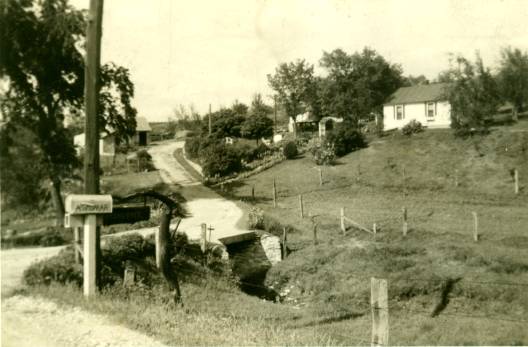
My Grandma had a approximate 20-acre truck farm (couple of cows, a horse, chickens, pigs, berries, grapes, fruit trees, vegetables, alfalfa) located across the road and creek from where I grew up as a child. She earned her entire income from this farm.

The hired man used a horse to prepare the ground for planting and to cultivate between the close rows of berries and vegetables. The manure was stored in piles and later carried to the field on a sled for distribution as fertlizer.

Grandma never had water piped inside her small house. The outhouse was about fifty feet from her front porch on which we sat, talked, and shelled lima beans during hot summer evenings. Indoor recreation consisted of talking among family members and visitors, and playing games and cards. Outdoor recreation consisted of horseshoes, walking, raising goldfish, playing in the creek and catching crawdads, and shared meals and conversation with relatives and friends who visited.

Her always cool water for drinking, cooking, cleaning, and bathing came from either a cistern or by walking from the house down to a spring-fed well at the bottom of the hill and then carrying the buckets back up the hill to the house. A creek was close to the west edge of her property, along the county road.

Grandma had no basement, just a cellar dug in the dirt under the house. A couple of casks of home-made wine and jars of preserved fruits and vegetables could be found in the cool cellar. In the fall and winter, a crock was filled with shredded cabbage to ferment into sauerkraut. A truck with many cross-slats to hold crates of berries, vegetables, and fruits was used to transport produce to the City Market about every two or three days during picking seasons.

The barn was used to store farm tools, provide shelter for the horse and cows, and allow hay to be kept protected in the loft. A small white chicken house was located close to the outhouse and further away from the hired man's one-room house. A pig shed completed the buildings on Grandma's farm.

Grandma's farm was mostly self-sufficient during the depression of the 1930s and during the rationing of essential items during World War II. They still needed to buy gasoline and tires for the truck to take produce to the City Market, electricity for lights and the cook stove, coffee, sugar for canning, clothes and shoes, and a few other things. But they had food, water, and a warm house with a wood stove. Grandma told me she could make bleach from wood ashes and also make soap from the lard of her pigs if she had to, but she usually bought these items. She was assisted in farming by a hired man and my Mother. During picking season, poor people were hired and paid by the box.

The major uncertainly was the weather. One spring the crops were planted and a freeze in mid to late May destroyed all the young plants. Everything had to be replanted and my Mother remembers that they produced very good crops for the rest of the summer.

Rainfall was problematic and I remember my Grandma and Mother (who helped Grandma with farming) praying many times for rain during periods of drought. Only the vegetables planted near the creek could be fairly easily watered during dry spells.

Children either went to a Catholic school or a much closer public school.

Small Family Farms in the Early 21st Century


Several Catholic families, each with a number of children, live west of Kansas City on acreage that ranges from several acres to about twenty acres. Taken as a whole, here are some of the elements that distinguish a small family farm in the 21st Century.
  1. The fathers all work at salaried or self-employed jobs with benefits (either paid for by self or by an employer). Most parents are well-educated.
  2. The family saved up sufficient money to buy land and a typically large house in the early years of marriage
  3. All the farms have barns; some shelter horses, cows, goats, and lambs, and store hay
  4. Farming is on a significantly smaller scale because mass production of animals and eggs means these products are often bought more cheaply than if they were raised
  5. The great majority of family food is bought, rather than raised, especially during non-harvest seasons and when fresh and frozen products are desired
  6. At least one family has a chicken house and raises chickens and eggs, although the reason for the chickens is simply to teach the children to work and be responsible
  7. Horse manure is picked up from the pasture and barn and used for garden fertilizer
  8. Homes are plumbed with water and waste systems (septic tanks)
  9. None of the houses have installed cisterns to trap and store water from rainfall on the roof
  10. Water is obtained from rural water systems
  11. New houses are well-insulated and heated using high-efficiency wood fireplaces and propane furnaces
  12. Houses have refrigerators and freezers to store food
  13. Air conditioners are used during hot periods
  14. Inside recreation consists of CD and DVD players and electronic games
  15. Cooking stoves are propane or electric
  16. Horses are not used as draft animals but for recreation
  17. Gasoline powered tools are the norm, including lawn tractors
  18. Gasoline and propane are often purchased in quantity and stored on the farm
  19. A limited number of berries, vegetables, and fruits are raised for home consumption but are not sold for money
  20. Trees and plants are irrigated during droughts
  21. Garage sales and Ebay are patronized for clothes, shoes, house items, toys, etc.
  22. Families often share children's clothes and expensive equipment with each other
  23. Labor for the farm is supplied, not by hired hands, but by parents and their children.
  24. Outdoor family recreation on the farm includes playing in creeks and barns, catching crawdads and minnows, riding horses and 4-wheelers, swimming in large plastic pools, jumping on trampolines, and shooting BB guns and arrows
  25. One family has installed wind turbines and solar cells to generate electricity that is stored in over a ton of lead acid batteries; In most periods, this family is able to provide electricity for all their home needs
  26. Children are almost all home-schooled.
Similarities between the family farm of the 1930s and a small family farm of today are somewhat apparent, but there are significant differences. Can we ever return to the early part of the last century with its agrarian economy? I don't think it is possible. However, the family farm of today provides many opportunities for channeling the energy of children into productive work and responsibility for animals. It also has the potential for being a lot more self-sufficient in case of depression or wartime shortages. Moreover, children living on a farm are never bored; they have a much larger area in which to play and more things to investigate, especially if animals are present and a creek is available.

Argent and the Poncho Ladies

Argent has posted news of one of the new priestesses who simulated a Catholic Mass in the Philadelphia area. The woman is really a high school nurse who is "an active member of the Church of the Beatitudes, a congregation of about 20 people in the Old Catholic community. The group rents space from Garden United Methodist Church in Lansdowne."

What I really like most about Argent's post is his name for the priestesses--Poncho Ladies.TM

Aug 6, 2006

Why Write?

Is one of the questions proposed on a new message board for Traditionalist Catholic writers at Collegium Scriptorum Catholicae. Participants must register for access and are encouraged to provide help and receive help in writing fiction. Most of the writers apparently attend SSPX chapels and indult Masses. I was invited to join because of my preliminary 'science fiction' in eight posts to predict the future of Catholicism over the next 90+ years.

One of their discussion boards looks at "Where Has Writing Brought You?" Various answers were presented on why these Catholic authors write:
  • Delving into all kinds of subjects, such as languages and cultures and countries
  • Learning to love the study of philosophy and ethics
  • Deepening an appreciation for the Catholic religion, and for the field of apologetics
  • An obligation to share with others the truths I have been shown
  • An obligation to self, so the author grows with his work
My own answer is based on the experience of a little (very tiny!) old nun who died over 20 years ago. When she had to retire from active teaching, she became the librarian at the Catholic grade school. She took her responsibility seriously and in her seventies attended a college class on library science.

One day Sister asked me what kind of rationale should she use to recommend specific library books to children. She was clearly concerned by failing one question on a test. The instructor marked her test answer as wrong and said the correct answer was that a librarian should push books that students will enjoy and which will teach them something about a secular subject.

I remember vividly when the old nun looked at me (somewhat sorrowfully) and asked whether she was wrong in her test answer to recommend books to her students that deepened the Catholic faith and taught good moral habits--such as courage and self-sacrifice. I responded that her answer was the right one and that her instructor was wrong. [Even a wonderful and holy old nun who kept and taught the faith and wore a complete habit needed confirmation of her beliefs in the turbulent 1970s.]

So, why should a Catholic author write? The answer is the same as from the old nun who advised children on the best books to read in the school library. A Catholic author should write to deepen the Catholic faith and teach his readers good moral habits. The best writers make their fiction interesting and entertaining as well, but that is not too difficult because good opposing evil is always an exciting story. Adding Catholic historical and other information is a further plus for both the author and the reader.

Aug 5, 2006

Happy First Birthday, Krusty!

The blog that inspired my own blog is Curmudgeon's Cave. Congratulations "Krusty" on your one full year of blogging. I'd like to buy you a birthday cake with one candle, but you're sort of hard to locate! Tell me where you want me to deliver it. Signed: "Dusty"

Why Not Divorce? Second Note to a Friend.....

Please realize that you did not receive a sign from God when you decided to proceed after you heard your husband, R, say he wanted a divorce. If the sign were from God, it would not have contradicted Jesus’ teaching about divorce. Distinguishing between a sign from God and a sign from Satan sometimes requires spiritual discernment, but in this case the simple contradiction makes it clear.

St. Theresa of Avila is one of 33 Doctors of the Church and warned that one should never ask or desire God to give a vision or a personal sign. She gives several reasons:
  1. The desire shows a lack of humility
  2. One thereby leaves self open to "great danger, since the devil needs only to see a door left slightly open to enter"
  3. There is the danger of autosuggestion, and she says that if one has a great desire for something, he/she can easily persuade self that he/she is seeing or hearing what is desired
  4. It is presumptuous to want to choose one's own path: only the Lord knows what is best
  5. Very heavy trials commonly go along with such favors; and
  6. It could even bring loss.
St. Theresa adds that many holy people have never had such a favor, while there are others who have had them and yet are not holy. A person who gains the virtues at the cost of his own labor has earned much more merit." (Interior Castle, 6.9).

You have started on a spiritual road and seem to have gone further than R. He has not followed the same course as you and continues to oppose your attending church and taking your son to church. Yet I suspect he may not be that far behind, unless his path is interrupted. I was particularly impressed by R's comment that your friend’s Hispanic husband was a very good example of Christian ideals and charity.

Dear Friend, you said it was only two or three years ago that you finally felt the need for Jesus in your life—now you are impatient and angry because your husband has not yet received the same grace. Yet R engaged me in a rather lively discussion about Catholicism while visiting you in _____, and I did not sense any animosity whatsoever! He was clearly arguing to generate a good response. And of course I defended Catholicism with all the energy and enthusiasm that I could muster, and all he did was smile! I would encourage you to defend your Christian beliefs vigorously when R contradicts them.

With regard to the "cafeteria approach," please don’t say that both sides have the same value and that your children can pick and choose which side to believe. Now is the time to stand for faithfulness and live in it. Today. Yesterday is gone. Nobody can change the past. What is chosen this day will affect both today and tomorrow for your children and grandchildren.

[Slight edits were made to my letter to a friend for publication in this blog.]

Why Not Divorce? Part 2

God does not like divorce! Some believe His laws are made by Him for His own sake, or that He doesn't know what He is requiring of us. God's are made for us to be happy and they consistently work for our good. My 60+ years of experience indicate God knows what he is doing.

I have seen only one “good” divorce—my Aunt O divorced Uncle O because of his drinking and physical cruelty to her and their youngest son. However, Aunt O told Uncle O she still loved him and would return to him if and when he stayed sober for six months. He didn't believe she would stay the course, but she found the first job she ever had to support herself and her son to show him she was serious. He did stop drinking, and they were remarried. The only problem afterwards was his sanctimonious attitude about his great sacrifices and his continued spending them into debt—but Aunt O remained a faithful and loving wife until he died. She was a gentle and kind woman who gave our family a wonderful example of marital fidelity.

Other wives I know were determined not to give up on their husbands and stayed married in spite of many grave difficulties. Their fidelity, perseverance, and long-suffering were almost always rewarded spiritually, materially, and psychologically. Mrs. C told me that her marital problems were extreme, but that she stayed with her husband because Jesus commanded it. In her later life, her husband did a lot of the housework and treated her like a living saint—which she was! Mrs. C asserted her new life was "heaven on earth" and made up for all the difficulties of the past. I doubt whether one of their sons would have become a faithful priest if Mr. and Mrs. C had divorced.

Mr. and Mrs. L were good friends who had five children, but Mr. L was as unfaithful to his wife as any man I ever knew! She finally had enough and came to my house one day to cry and explain she was going to see a lawyer the next day. Her husband was attracted to other women and she felt unloved. I explained to Mrs. L that Mr. L really did love her, but had a unfortunate strong physical weakness with other women. In addition, Mr. L was a very good father and provider for the family and Mrs. L agreed. We also talked about other aspects of a possible divorce--including temptations after marriage, future parental guidance for their children, and financial matters.

Several times over the succeeding years, Mrs. L thanked me for advising her to stay with her husband and not proceed with the divorce. No, her husband didn't always remain faithful, but he was always kind and generous to Mrs. L who became more aware she was still far and away No. 1 as his only wife. They now reap the rewards of HER fidelity with many successful children and beautiful grandchildren. I believe Mr. L has finally stopped crossing the fence into forbidden territory, probably more because of his age than anything else!

Mrs. D, an exemplary Lutheran who has taken care of flowers in her church for over 30 years, recently lost her husband who was far from ideal to say the least. She continues to take pride that she was always faithful to her husband, even when her husband's drinking and spending kept him from supporting his family, so that she had take a job to earn the family wages. Mrs. D now is rewarded with financial security, her children had a good upbringing, and she remains a sacrificing person who continues to make life better for everyone she touches.

Mrs B lives not too far away and is a friend of a friend. She remained with her profligate and selfish husband until his death. She has a clear conscience and a nice home while enjoying her retirement years.

An opposite example (of many that I know) is the divorce of Mr. and Mrs. C2. Mrs. C2 was active in Right-to-Life in the mid-1970s. Mr. C2 had trouble 'finding himself', couldn’t keep a decent job, and apparently was cruel to Mrs. C2, physically and emotionally. She divorced him, studied to become a nurse, and so raised her two sons by herself for the next dozen years because her husband moved far away. I learned some years ago that her husband eventually became a respected teacher and lives a successful life with a new wife—but it wasn’t Mrs. C2 who benefited from it. Both sons are now remote from their mother; one has chosen to live near his father.

A classmate of mine divorced her husband because of his beating her regularly, even though he was an active Catholic and member of the Legion of Mary. Even though her physical health was in jeopardy and she had good reason to leave, the result is that she has three malfunctioning children (they are now in their late 30’s, have had many personal and other problems, and at least one remains distanced from her). My classmate is a good person who tried to do her best to prevent and solve the problems that originated after the divorce—but the children needed both their parents in their developing years and they didn’t get it.

A close relative divorced his unfaithful wife and the subsequent stories of their oldest son are heartbreaking. He was a good kid before being told his parents were divorcing on the day of his 12th birthday. The boy became a street kid, took up drugs, couldn’t keep a job, was kicked out of the Navy, etc. A saintly lady I know prayed for years (and continues to pray) for him, and the young man finally began a new responsible life in his 30’s that has continued for several years. But what a long waste of a brilliant mind!

I was invited to the young man's wedding at a Catholic chapel several years ago. Interestingly, the wedding reception featured a number of people who grabbed the microphone and testified with great feeling that the young groom was responsible for bringing them out of the drug culture.

Aug 4, 2006

Why Not Divorce? Note to a Friend....

Why should you remain faithful to your marriage vows? You should be able to determine whether the following arguments make sense:

  • A divorced husband is let loose to prey on other women; better to keep your family problems mostly at home and not share them with the rest of the world
  • Divorced husbands/wives commit many sins they would not otherwise commit (e.g., bad example, hatred, bitterness, blame, deceit, adulteries) all of which help to form children in the wrong way
  • Children’s psychological lives are harmed, as virtually all studies of children with divorced parents have shown—poor academic achievement, drug-taking, inability to establish permanent relationships, etc. One friend was a senior in high school when his parents announced his divorce, and he has said the year following the divorce was the worst of his life and that he has never recovered from this heartache. He points out pictures of himself where he aged dramatically in less than two years because of the effect of his parents' divorce
  • Divorce results in feelings of inadequacy, failure, and guilt for both parties, followed by development of a bad conscience that justifies past and future sins which is destructive to both personality and soul
  • A church-going parent who divorces his/her spouse causes children to reject religion, rather than embrace it
  • A Christian who divorces says “I will no longer carry my cross” when a true Christian asks Christ to help carry the cross

In fidelity, your children receive the best possible example of Christian life, a true gift for the next generations of your family. Say very simply: 'My God, I am sure You are going to forgive this wretched husband, and I have so much confidence in Your mercy that I shall go on being sure even though he does not show any sign at all of being sorry.”

Aug 2, 2006

Swimming in the Tide


Traditionalists now are swimming in the beginning of the slack tide that occurs when the tidal current slowly switches direction from the ebb tide to the flood tide. The past forty years, we have tried to swim against a strong ebb current that has taken many Catholics out to sea to drown. Lots of people did not survive because of not swimming smart enough or hard enough against the liberal beliefs and practices of the ebb current.

Many, if not most, of the survivors were fit (through exercise of their faith) to either swam strongly enough against the ebb current and preserve their faith. Or they swam at a right angle to the current to get out of the ebb tide sweeping them to sea. In other words, they swam to waters that were more tranquil or to islands, such as the traditional Latin Mass or a traditional parish.

We can expect the slack tide to ultimately become a flood tide, where Catholics will return to terra firma.

Slightly Incredulous (and Wonderful) Adoption Story

Many years ago, a fine Catholic couple decided to adopt a child. They had one daughter, but no more babies were being born. Both parents wanted more children and so they were told by a doctor friend that he had a young girl patient who was about to give birth. The doctor said another family wanted a girl to adopt, and he asked the couple if they wanted the baby if it was a boy. They easily said yes.

The young girl was a student at a public college and had become pregnant. She quickly broke up with the young man who never knew his intimacy had produced a child. The girl kept her pregnancy a secret from her family for most of the nine months. And she made excuses for not going home or meeting her parents for the last couple of months of pregnancy. So the parents never knew they had a grandchild.

In the meantime, the girl began dating another fellow and decided to marry him. She successfully hid her pregnancy and the man never knew his bride-to-be was pregnant with another man's child! The girl and her fiancee were married within a month or two after the baby's secret birth.

A healthy baby boy with dark hair was born and was immediately embraced by the couple who were delighted to have a new son. Within about a month, the couple were much surprised to learn they were expecting another baby. A little sister was born to join her big brother who was still less than a year older.

Naturally the two children grew up as wonderful playmates and eventually became close confidants to each other. As the boy grew up in the small town, friends and acquaintances noted his intelligence. He especially loved to farm and ride motorcycles.

The boy was told at an early age that he was the one specially chosen by his family. When he was about 16, his parents showed him the newspaper engagement announcement with his birth mother's name and picture. The resemblance between the birth mother and the son was very clear. The young boy told his younger sister that someday he wanted to find his birth mother, but he did not tell his parents of his desire.

The young man decided to become a doctor and so began his college years as a pre-med student. In his freshman year, he told his girlfriend (now his wife) that he had been frustrated in locating his birth mother. Apparently, everyone identified in the engagement announcement had either moved, changed their name, or could not be located.

The girlfriend noted that the engagement announcement said that the young woman was a member of a sorority, and she said that sororities always kept good records of their past members. The young man persuaded his girlfriend to make the call to the sorority house of the birth mother. The girlfriend explained she was a friend of a past sorority member and wanted to contact her, and she gave the maiden name of the birth mother to ask for the current address. The sorority's answer was a city in Florida.

During Christmas break, the young man and two of his close friends planned a ski trip to Colorado. Whether they really planned to go to Colorado, I do not know, but they drove east from Kansas, with the parents believing they were driving west.

The address in Florida was an apartment building with balconies. It was evening when the boys identified the apartment of interest and saw a woman on the balcony. She walked back inside, and the young man and his two friends discussed how best to approach her.

Initially, the young man thought that he would give his birth mother a choice on whether she wanted to see him or not. The plan was for his two friends to knock on the apartment door and hand her a note that read: "I am the son you gave birth to 18 years ago, and I understand that your life may be quite complete at this time. I would like to meet you, but if you believe a meeting is not good for either of us, then I will understand. If you do want to meet me, call my motel at xxx-xxx-xxxx."

On further discussion, the young man reasoned that if his birth mother said no to the invitation to meet, then knocking at the door to give her the note would be all the opportunity he would have to see her. So the young man decided to deliver the note himself. When the woman answered her apartment door, he handed her the note. The woman appeared quite nervous and reluctant to take the letter, but it was pressed into her hand. [The woman was afraid she was being dragged into an apartment tenant fight.] The young man quickly left to return to the boys' motel room which they had previously rented.

When the boys arrived at their motel room, the phone inside could be heard ringing. Terribly eager to catch the phone call which they knew had to be from the birth mother, they finally unlocked the door to reach a silent phone. However, within a few minutes another call rang. The young man answered it and was relieved and delighted to hear his birth mother invite him and his two friends to her apartment. I was told the two of them talked most of the night, with the two other boys returning to their hotel room to sleep after the long trip from Kansas.

One of the most interesting parts of this story is what the birth mother told her son. He asked his birth mother if she ever expected to see him again. Her answer was that she was a volunteer at an adoption agency. Occasionally she would be told by a pregnant girl, "You don't know how difficult it is to give up a child!" The birth mother would respond, "Yes, I do know because once I gave up my son for adoption." Then the girl would frequently counter, "But you'll never see your child again." The birth mother said her answer was "Yes, some day he will come knocking at my door."

The young man told his parents and two sisters of his meeting with his birth mother. I spoke with the father not too long after the first meeting in Florida, and asked him what his reaction was. With the most beautiful statement I could have ever imagined, he responded happily, "The family just got a little larger!" This very generous man meant it too, because every year he and his wife invite the birth parents, and the half-brother to their son, to their home for a special time. And most of the time, they come. In addition, all of them were invited to their son's large wedding with many, many guests.

How did the birth father know about his son? Well, the young man asked his birth mother and she told him the name. A little searching and he was found. Needless to say, the birth father was shocked, then delighted to learn of his son. The birth father has another son (the half-brother) and was now divorced.

The birth mother is a professional who also is divorced. She was the only child of her parents, and both were now dead. Moreover, she had no siblings and was quite alone in the world. The son she gave up for adoption was now her only close relative. The two of them speak regularly by phone and they see each other about once a year.

The young man's mother was initially concerned that she might lose the affections of her son because of finding his birth mother. That never became a problem, and their son and his family visit them regularly.

P.S. The young man is now a prominent physician who is regularly invited to give talks to other doctors all around the country. Adoption saved his life, and through his subsequent professional skills, the lives of many, many others. Once he told me that his adoption story should be written, and now it has.


Aug 1, 2006

Perspective: NFP vs China's One-Child Family

I have been amazed at the 60+ comments on Natural Family Planning (NFP) that have been posted on KC Priest's blog--many of them very lengthy arguments. The commenters have been largely anonymous but yet some seem to know each other. They appear to be good and faithful Catholics who have gotten very excitable as they stake their positions into deeper soil. Nevertheless, it seems they should end their shoveling and perhaps take account of much larger problems associated with propagating children.

China's coercive population policy restricts the number of children to one per couple, using whatever it takes to kill unwanted babies. A blog discussion of China's one-child-only policy would be in stark contrast to the one over NFP being taught in marriage preparation classes--the focus of the discussion being conducted on KC Priest's blog. Not that the commenters on NFP aren't right (choose whichever viewpoint you like--there are several), but the subject is dwarfed by China's one-child-only policy.

Yes, China is a long way away, but not so far by Internet. In addition, a lot of Chinese students at the University of Missouri-Kansas City might be attracted to a good web discussion of the likely future of China AFTER it removes its one-child-only policy.

How bad is it in China? A priest from China writes:
One child policy has made many families struggle between their traditions and faith. The problematic thinking that boy is more valuable than a girl makes us feel difficult to preach. Can these people see the only child may become a little emperor in the family? They probably do. What is the moral standard for them to teach their children? To spoil children is not healthy.
A one-child family has major implications for vocations to the priesthood. Another priest (presumably from the patriotic Church of China) comments:
The problem of vocations in China is that candidates who enter the seminary are not very mature especially from a psychological point of view. Now youths all come from families where they are the only child. Dealing with them is much more difficult: they are not used to being with others; they have always been spoilt at home by their parents; they have always been treated like royalty by their grandparents. Renouncing the wellbeing, peace and relationships padded in cotton wool to serve Jesus Christ and the Church is somewhat difficult for them.
Underground mothers and children in China are discussed here, although laws are now more strictly enforced to reduce the number of underground children. Personal stories of how bad it is for women in China to conceive a second or third or fourth child are told here.

The commenters at Sacerdos in Aeternum need to place their discussion in perspective.

Liguori Press Removes Meehan's Books

It took the attempted women's ordinations before Liguori Publications removed Bridget Mary Meehan's books from the Liguori website and bookstore. Prodigal Son called Liguori and determined they no longer will sell Meehan's books.

Yet Joan Chittister is still a featured writer at Liguori. Not much difference between Meehan and Chittister that I can see, except one is braver than the other at walking off a cliff!

Matches = Matchmaking

Five posts now have been written on matchmaking--The Tangled Thread, The First Match, The Second Match, The Third Match, and Marriage Preparation. The system for choosing a spouse in the U.S. has not worked very well over the past 50 years, as described in Marriage Trends Look Bleak. Better ways to achieve successful marriages are needed.

This series of Matchbooks looks at successful courtship and marriage in the past, as contrasted with unsuccessful systems of today. More Matchbooks are coming. Watch for them.

Jul 31, 2006

Help!

Radical Catholic Mom has posted a sad story of her pro-life work that has resulted in her being severely chastised (publicly) by the Bishop. She says she's down and depressed over the incident. Why not read her story and write a word of encouragement. For sure, she and her friends have gotten a bum rap.

The New Confessionals

The Curt Jester has posted A Confessional Out of Dilbert? which discusses the post-Vatican II change from box-type private confessionals to more open arrangements. Curt's comments focus on the loss of privacy of confession. This loss of anonymity has presumably been a major reason for the significant decrease in the sacrament of Penance. For example, the schedule of one parish in Kansas City with over 3,000 households lists only a half hour of "Reconciliation" a week. I'm sure the pastor would be willing to hear more confessions if you call him, but to call him would mean the loss of anonymity (which is protected by canon law).

An old priest of the 70s once told me that the privacy of the penitent was important, but was not the real issue. The real issue was that the confessor priest was now UNPROTECTED! A wall or grill was needed between the priest and penitent to protect the priest from a sad, attractive woman who is having a difficult time with her marriage. A wall between them keeps the priest and penitent from embracing.

The loss of private confessions is just another post-Vatican II change that has resulted in a lot of problems in the church.

Women's Ordination--The Penalties?

Mary Alexander of AgainstAllHeresies refers us to a Boston Globe article that a woman department head in the Boston Archdiocese was invalidly and illicitly ordained as a priestess last year in a boat ceremony on the St. Louis Seaway. The woman is (now was) director of healthcare ministry for the archdiocese and coordinated the work of chaplains at 70 hospitals in the archdiocese.

Jean Marie Marchant offered her resignation to Sean Cardinal O'Malley in a letter last week in which she said that a year ago, using a pseudonym, she had been among nine women who had participated in an ordination ceremony on the St. Lawrence Seaway in Canada. What is remarkable (or unremarkable, depending on your take) is that Cardinal O'Malley has not followed the Pope in announcing the excommunication of the woman. Like Bishop Dolan, he may be planning to make Rome take the responsibility. Do you think these Bishops want to pass the buck to Rome so Rome has to take responsibility for beating up on poor little old ladies? Cowards, the lot of them!

Diogenes also comments on the ordination. His comments and questions are so perceptive that you should read his remarks in their entirety.

The most interesting post comes from a Boston woman, Carol McKinley, who is thoroughly fed up with all the shenanigans in the Archdiocese of Boston. I can't speak highly enough of Carol who seems to be the bravest woman in Boston, and for at least four years as a blogger! Some of Carol's recent comments on Hidden Priestess Marchant (also review her many other posts on Marchant):
...a woman who has been teaching heresy for decades, appointed to the health care cabinet position by Cardinal Law and subsequently kept in that position despite numerous complaints - - a woman who is involved in a second marriage to an ex-priest (quite possibly invalid), 'ordained' by a schismatic female prelate representing herself as having the power to administer the papal indulgence at the hour of death - - who by her own admission has been "quietly" anointing people instead of calling a priest to administer viaticum...

O'Malley's spokesman, Terrence C. Donilon, said in a statement. ``We greatly appreciate Ms. Marchant's many years of service in healthcare ministry. The archdiocese greatly values the ministry of lay and religious women. Their contributions are vital to the life and mission of the church."

Am I [Carol McKinley speaking] to understand that those of us whose dying parents and relatives who have been foolishly charmed into believing that what she is doing is valid sacramentally, and died without the Last Rites of our Church (the pardon for all the sins they had committed in their lives), that you "greatly value" what she has done and you consider her contributions "vital" to the life and mission of Christ's Church?

If you are unaware of how traumatizing that statement is to people who understand the authentic faith, I certainly would be happy to give you my own personal experiences with my mother who was medflighted to Brigham & Women's hospital in a coma with a broken neck. She was "blessed" by a priest who had been removed from a parish by Cardinal Law for working with a woman in a ministry together which had feigned sacraments. I luckily had access to a priest who was willing to come and administer the official sacrament of the Church to her. As bad as I knew things were, I had no idea this was going on. When I explained my experience to the undertaker, he told me this was the norm in hospitals in Massachusetts - lay chaplains have wormed their way into positions where they can hijack the Sacrament of the sick. It's frightening that you greatly value these kinds "contributions" by feminists stampeding our faith.

Jul 30, 2006

A Million Rosaries for the Pope

The newly elected Superior General of the Society of St. Pius X (SSPX), Bishop Bernard Fellay has announced that the Society wants to present a spiritual bouquet of a million Rosaries to Pope Benedict XVI. The rosaries are to be collected and recited by the end of October for the following intentions:

1. To obtain from Heaven for Pope Benedict XVI the strength required to completely free the Mass of all time, called the Tridentine Mass.

2. For the return of the Social Kingship of Our Lord Jesus Christ.

3. For the triumph of the Immaculate Heart of Mary.

It appears that the SSPX is responding to the request of Pope Benedict XVI in his homily at his Papal Installation Mass: "Pray for me, that I may not flee for fear of the wolves."
The 'progressives' within the hierarchy are said to be regrouping quickly following the defeat of the liberal prelate, Carlo Cardinal Martin, at the most recent Conclave. Fr. James McLucas, editor-in-chief of The Latin Mass Magazine, quotes an opinion that the new Pope has very little time to accomplish even the beginnings of an authentic counter-reform.

The Pope needs all the rosaries he can get. I'm glad to see the SSPX lead the way.

The Third Match (Bosnia and Herzegovina)

Fr. Ivo Sivric's 1982 book, The Peasant Culture of Bosnia and Herzegovina, describes Catholic courtship and marriage in a poor, mountainous region of what was Yugoslavia. I've reviewed another part of the book in a previous post.

Sunday afternoons are for the purposes of diversion, entertainment, and courtship of the peasants. Fr. Sivric notes that one of the favorite songs of the region contains the words, "At the gathering after Sunday Mass, a girl appealed to me." Gatherings of young people also take place during the long autumn and winter evenings, when they are expected to work on special projects together, such as husking corn. These social gatherings are filled with "singing songs, telling jokes and stories, and reciting epic poems." The boys refer to these gatherings as girl-searching-and-watching parties. The boys are always urged to marry girls they know well.

Christmas is a special time for courtship because of the special religious celebrations that are arranged in the different towns. After Mass, the adults talk and the boys throw apples at the girls in which they are interested. A girl shows her interest in a particular boy by trying to catch his apple. The apple-throwing is accompanied by circle dances that are lively and loud. Parents watch from a distance.

The young people choose whom they wish to marry. Peasant sons are reminded by their parents to judge a girl by her mother, and girls are told that "integrity marries a girl off." Engagements are solemnly performed in the presence of a priest, and are preceded by a visit of the bridegroom's father, uncle, and one or two villagers to the home of the girl's parents. This meeting ends with an interview of the girl to determine whether she is freely willing to wed.

The bride is the center of attention through the engagement period, the two- or three-day wedding feast and during the weeks following the wedding. She is reminded of how much she is loved and how she is expected to sow this love as a main respondibility of her wifely vocation. Great meaning is attached to sexual intimacy, and premarital relations are regarded as immoral. If pre-marital intimacy occurs, the couple is committed to marriage, especially if a child is born.

Marriage in this peasant culture serves as "a means to perpetuate and embody humanity and Christianity." The ancient social customs surrounding courtship, engagement, and marriage produce a low number of divorces and marital infidelities in this peasant region.

Long-ago Advice for the Future Church

In the early 50s, we heard a lot of Sunday sermons on the seriousness of Communist takeovers of different countries. The latest victim had been China, the most populous country in the world, and Fr. P. seemed to believe the march of Communism would eventually reach the U.S.

Senator Joseph McCarthy
was investigating and publicizing Communist infiltration into the U.S. His investigation of undercover Communists in the State Department led to his book, America's Retreat from Victory, which describes how the U.S. facilitated the turn-over of European and Asian countries to the Soviet Union. [Don't students of today ever wonder how all those countries were "conquered" by the Communists when the U.S. was by far the most powerful country in the world following WWII?]

The later chapters in McCarthy's book's detail how the anti-communists of China were undermined by the U.S. government so that Mao Tse-tung (Mao Zedong) could defeat the Kuomintang and install a Communist regime that has lasted almost 60 years. The Cardinal Kung Foundation monitors the current sufferings of Chinese Catholics who cannot practice their Faith.

Back to the early 50s. Fr. P. preached hard and long against Communism because many priests were being arrested and either killed or imprisoned in country after country. I was very disturbed, especially because a few priests in these countries acquiesced to Communism to save their own lives. The "patriotic" churches were established around these unfaithful priests and were under the control of Communists to serve communist ends.

Naturally, the subject of Communism came up in the classroom. I asked my grade school teacher, a Benedictine nun, what should a Catholic do if Communists came to the U.S. and took over our parishes.

I've held on to Sr's answers as the very best advice on preserving the Faith in the face of the internal enemies of the Church. She said to keep the Faith as I was taught it before the enemies took over, that to accept changes to church teachings would be to follow the enemies of the Church. She added that it might be years that a person would have to stay steady in keeping the Faith of our Fathers. But that I must not budge and make compromises. I've always been very thankful for Sr.'s advice that allowed me to keep my Faith during the past forty years of trouble in the Church.

Hot Day and Starry Night

The last couple of days were spent on a family camping trip that we've done before to a small Kansas town. Three campers and one tent provided housing for the four families that were able to come. The weather was HOT, and the large swimming pool was great! This photo shows one of our grandsons jumping/diving from the board. Several other grandchildren are in the photo too.

The grandkids had a great time playing together. They swam, fished, rode bikes, played in the river, caught minnows, cut foot on rock, etc. The bikes are shown in this next photo, and were probably at ease until the kids finished eating, again.

In this part of Kansas, the stars at night are enormously bright. The grandkids stayed awake until it was possible to see one of the cell-phone satellites that have three rotating antennas that reflect the sun's light to the surface of the earth. Before the Iridium flare arrived, we saw several other satellites. However, it was the Iridium Flare with a magnitude of -5 that impressed the grandkids (and Grandma and Grandad!).

One of our children had printed the schedule of the Iridium flares for the latitude/longitude of the park where we camped. So we knew just where to look. Just before the flare occurred we also saw a shooting star pass over the same area of the sky. Double the excitement!

We returned early to KC to attend Mass this morning. Didn't want to take a chance on an unknown Mass at the local Catholic church. Thank you, Lord, for a good family vacation.

Copybook Headings

I've written previously about my spiritual grandmother, Lucy, who liked some of the poetry of Rudyard Kipling. Lucy was particularly fond of Kipling's Gods of the Copybook Headings, a strangely prophetic poem written in 1911. The term Copybook Headings refers to the sayings and universal truths that were printed on student writing pads and school books of a hundred years ago.

In his short poem (40 lines), Kipling was able to foresee our present society better than any science fiction writer I know--pacifism, sexual revolution, entitlements, etc. Kipling made it clear--violate the copybook headings that forbids such things and a society or civilization is destroyed.
But they always caught up with our progress, and presently word would come
That a tribe had been wiped off its icefield, or the lights had gone out in Rome.
The last four lines of the poem seems surely meant for our times--
And that after this is accomplished, and the brave new world begins
When all men are paid for existing and no man must pay for his sins,
As surely as Water will wet us, as surely as Fire will bum,
The Gods of the Copybook Headings with terror and slaughter return.
Where can you find the copybook headings--the synthesis of human wisdom? Why not start with the Book of Wisdom in the Old Testament?